Six Materials That Refuse to Die: The Self-Repairing Infrastructure Now Being Tested Across America
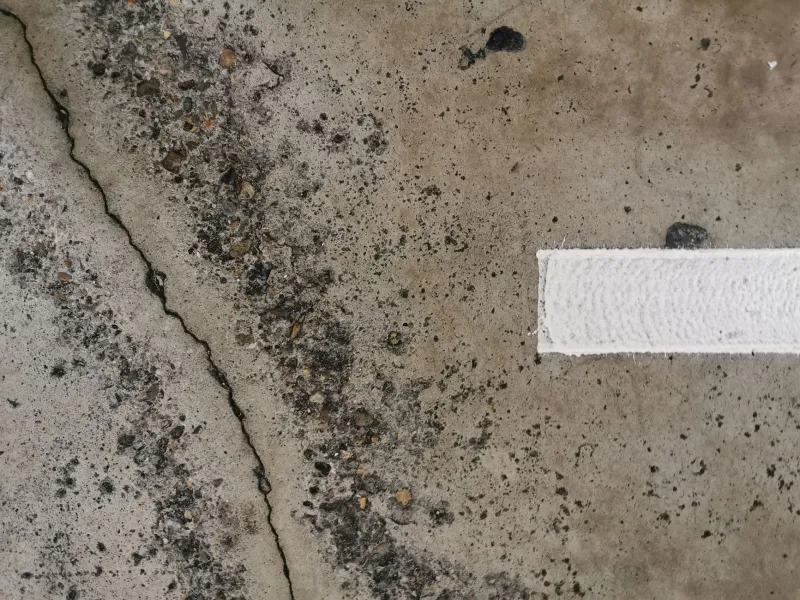
America's infrastructure does not fail dramatically; it fails incrementally, one hairline fracture at a time. The American Society of Civil Engineers' most recent report card assigned the nation's roads a D and its bridges a C, and the repair backlog is measured in the hundreds of billions of dollars. Against that backdrop, a class of materials engineered to repair themselves has moved from academic novelty to active field testing. These are six of the most consequential — and what their pilot projects actually reveal.
1. Bacteria-Laced Bio-Concrete
The most celebrated entry embeds dormant Bacillus bacteria and a calcium lactate nutrient into the concrete mix. When water infiltrates a crack, the microbes awaken, metabolize the nutrient, and precipitate limestone that seals fissures up to roughly half a millimeter wide. European researchers pioneered the approach, but US pilot programs — including state department of transportation evaluations — are now testing it in freeze-thaw climates, where cracking is most aggressive. The limitation is honest and straightforward: the healing works on micro-cracks, not structural failures, and the bacterial additive adds meaningful cost per cubic yard.
2. Microcapsule Polymer Concrete
Rather than biology, this variant relies on chemistry. Sodium silicate or polymer healing agents are sealed in microscopic capsules distributed throughout the concrete. Fracture ruptures the capsules, releasing the agent into the crack where it cures. Researchers at Oregon State University and partner agencies have explored capsule systems tailored to American highway mixes. The appeal is precision — healing triggers exactly where damage occurs — while the challenge is ensuring capsules survive mixing and remain viable for decades.
3. Vascular Self-Healing Composites
Borrowed directly from biology, vascular systems embed a network of hollow channels through bridge decks and structural components, ready to pump healing resin to damage sites on demand. Work at the University of Illinois Urbana-Champaign, a historic center of self-healing materials research, demonstrated repeated healing cycles in polymers — a critical advantage over one-shot capsule systems. Scaling vascular networks to civil infrastructure remains an engineering puzzle, but their reusability keeps them on the long list for critical structures.
4. Self-Healing Asphalt
Asphalt is thermoplastic, meaning it can be softened and re-fused with heat. Researchers, including teams in the UK and the Netherlands working with materials compatible with US paving practices, have demonstrated that induction heating — using steel fiber or bitumen additives activated by magnetic fields — can close micro-cracks in pavement before they propagate into potholes. The concept of a road that periodically 'reheals itself' overnight during low-traffic hours is genuinely within reach for pilot demonstration in the US.
5. Autogenous Healing Enhancers
Concrete already heals itself slightly, as unhydrated cement particles react with moisture entering cracks. Crystalline admixtures — crystalline waterproofing compounds that accelerate and extend this natural process — are the least exotic entry on this list and the closest to mainstream adoption. They have already been used in American transit tunnels and water treatment facilities, where water infiltration is the dominant failure mode. Their weakness: they require moisture, and they cannot bridge wide cracks.
6. Shape-Memory Polymers and Alloys
The most futuristic entry uses materials that remember a previous form. Shape-memory polymers and alloys, when heated or otherwise triggered, contract back toward their original geometry, physically closing cracks in composites and asphalt matrices. Research groups across US universities have demonstrated crack-closure in lab settings; field deployment is the clear next frontier, contingent on developing practical triggering mechanisms at infrastructure scale.
What 'Maintenance-Free' Actually Means
None of these materials eliminate maintenance — a claim no serious researcher makes. What they promise is a shift in the maintenance curve: extending the interval between expensive interventions by sealing small damage before it compounds. That shift matters enormously. A bridge deck that requires rehabilitation every 30 years instead of 20 changes lifecycle economics decisively.
The barriers are cost, code, and conservatism. Public agencies procure on lowest initial bid, penalizing materials whose value accrues over decades. Building standards have no framework for certifying self-healing performance. And civil engineers, reasonably, are cautious about embedding living organisms or exotic chemistries into structures expected to last a century.
Still, the trajectory is unmistakable. By 2030, expect self-healing admixtures to be routine in water infrastructure, bio-concrete in niche high-value applications, and self-healing asphalt in commercial pilot stretches. The roads and bridges of mid-century America may not be unbreakable — but they may, for the first time, be built to heal.