Reading the Ruins: How Acoustic Forensics Is Giving Collapsed Structures a Voice
Photo: Sgt. Christopher O'Quin, Public domain, via Wikimedia Commons
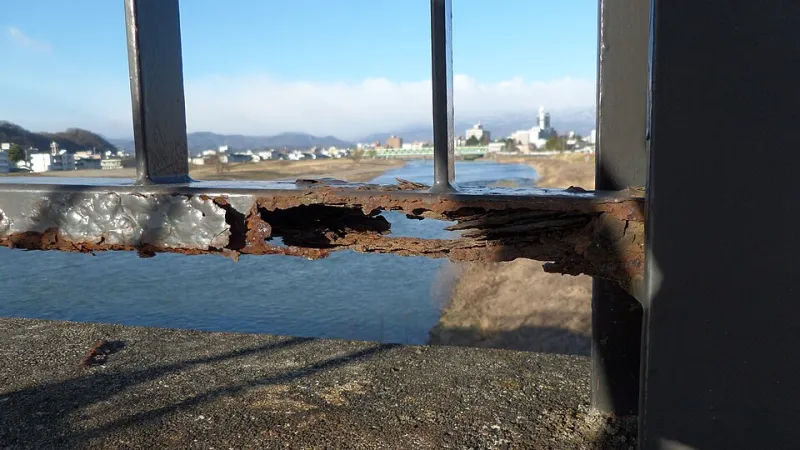
When a bridge fails, a building pancakes, or a retaining wall surrenders to decades of hidden stress, the event is typically understood through what remains visible: bent rebar, cracked foundations, displaced soil. Investigators photograph the aftermath, model the loads, and reconstruct a sequence of failure through inference and material analysis. But a quieter discipline is beginning to challenge that approach—one that argues the collapse itself leaves behind a record, encoded not in visible damage patterns but in sound.
Acoustic forensics, long applied in industrial and military contexts, is now being adapted by a cohort of American researchers to answer questions that visual inspection cannot. The field proceeds from a deceptively simple premise: every structural failure generates acoustic energy, and some of that energy is preserved—in fractured surfaces, in the crystalline memory of stressed materials, and in the sedimentary and geological layers that absorb and archive ground-transmitted vibration. The challenge is learning to read it.
The Physics of Preserved Sound
To understand why acoustic forensics holds promise as an investigative tool, it helps to consider what sound actually is at the material level. When a structural element fractures—whether a steel weld, a concrete column, or a limestone arch—the rapid release of stored elastic energy propagates outward as mechanical waves. These waves interact with surrounding materials, inducing microscopic deformations, altering grain boundaries in metals, and in some cases leaving measurable signatures in adjacent substrates.
Researchers at several American universities, including groups affiliated with civil engineering and geophysics departments, have begun cataloging these residual acoustic signatures with increasing precision. Using techniques borrowed from seismology—particularly passive seismic monitoring and acoustic emission analysis—they are developing protocols for detecting and interpreting the physical traces of past acoustic events in materials that were present at the moment of failure.
The science is not without complexity. Acoustic signals decay, scatter, and interfere with one another. A collapsed building is an extraordinarily noisy acoustic environment, even retrospectively, because the rubble itself continues to shift, settle, and respond to thermal and hydrological cycles. Separating the signal of the original failure from the ongoing noise of post-collapse dynamics requires sophisticated filtering algorithms and, increasingly, machine learning classifiers trained on controlled laboratory failures.
From Industrial Accidents to Archaeological Inquiry
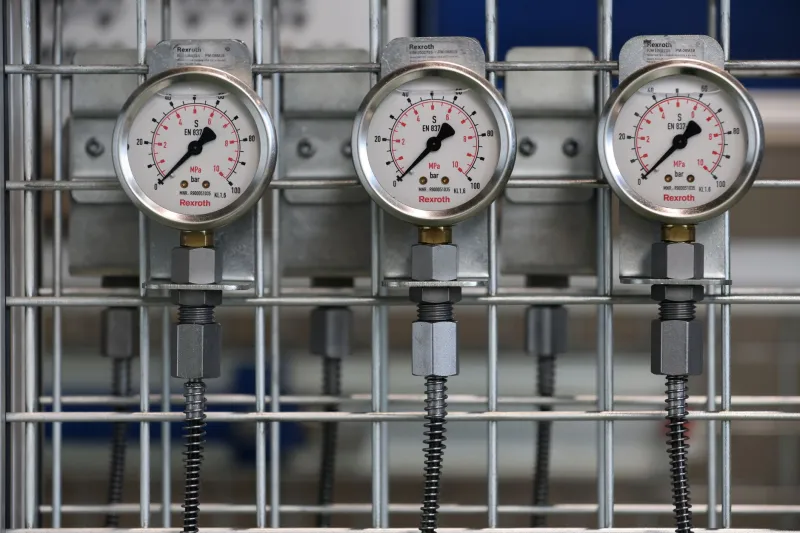
The practical origins of this work lie in industrial failure analysis. When a pressure vessel ruptures or a weld fails catastrophically in a manufacturing context, engineers have long used acoustic emission testing to understand crack propagation—both before and after failure. What is newer is the ambition to extend that analytical framework backward in time, applying it not to instrumented structures but to uninstrumented ones whose failures were never recorded.
This is where the discipline intersects, unexpectedly, with archaeology and historical engineering. Several research teams are now investigating whether acoustic forensic methods can be applied to ancient or historical structures—Roman aqueducts, pre-Columbian earthworks, colonial-era American bridges—to understand failure modes that occurred centuries before any monitoring technology existed.
The approach involves extracting micro-core samples from fractured surfaces and analyzing them for acoustic emission signatures using laboratory resonance techniques. Preliminary findings suggest that certain fracture surface morphologies retain information about the rate and direction of crack propagation, which can in turn indicate whether a structure failed suddenly under extreme load or gradually under chronic stress. This distinction carries significant interpretive weight for historians attempting to understand whether ancient infrastructure collapsed due to seismic events, material fatigue, or deliberate demolition.
Geological Strata as Acoustic Archive
Perhaps the most ambitious strand of this research treats the earth itself as a recording medium. Ground-transmitted acoustic energy from large structural collapses—dam failures, mine subsidence events, building implosions—propagates into surrounding soil and rock, where it can induce measurable stratigraphic effects. Researchers working at the intersection of geotechnical engineering and environmental geology are developing methods to detect and date these effects using a combination of ground-penetrating radar, sediment coring, and spectral analysis.
The practical applications are significant. In regions of the American West where historical mining operations left behind a legacy of subsurface instability, understanding the acoustic history of past collapses could help engineers predict where future failures are most likely to occur. Sedimentary records that preserve evidence of past seismic or collapse events could be cross-referenced with historical accounts to build more accurate timelines of infrastructure failure—timelines that, in some cases, could inform current liability determinations or regulatory decisions.
The Forensic and Legal Dimensions
This is where acoustic forensics acquires a dimension that extends well beyond academic inquiry. In American civil litigation, the cause and timing of structural failure can determine liability worth hundreds of millions of dollars. Traditional forensic engineering relies heavily on material testing and load modeling, both of which involve significant assumptions and can be contested by opposing expert witnesses. Acoustic forensic evidence, if its evidentiary standards can be established, could offer a more direct record of failure mechanics.
Several engineering consulting firms have begun exploring acoustic forensic methods as supplements to conventional failure analysis, particularly in cases involving post-earthquake building collapses, bridge failures, and dam breaches. The legal community is watching with cautious interest. For acoustic forensic evidence to be admissible in federal court under Daubert standards, the underlying methodology must be shown to be scientifically valid, peer-reviewed, and applied consistently. That process is ongoing, but the trajectory is toward eventual acceptance.
Building the Discipline
What remains is the work of institution-building. Acoustic forensics, as applied to structural failure and historical investigation, does not yet have a dedicated professional society, a standardized certification pathway, or an established body of peer-reviewed literature sufficient to anchor it as a mature discipline. It exists, for now, at the intersection of several established fields—acoustic emission testing, geophysics, forensic engineering, and materials science—drawing methods and practitioners from each.
American research universities are beginning to address this gap. Graduate programs in civil and structural engineering are incorporating acoustic monitoring methods into their curricula, and interdisciplinary research centers focused on infrastructure resilience are providing institutional homes for work that does not fit neatly into any single department.
By 2030, the ambition within the field is to have developed a validated, reproducible protocol for post-failure acoustic analysis that can be applied to a range of structural typologies—from modern steel-frame construction to historic masonry. If that protocol materializes, the implications are considerable. Every future collapse would become not merely a tragedy to be cleaned up but a data set to be interrogated. And some past collapses, long considered closed cases, might find themselves reopened by the testimony of their own residual sound.