Listening to the Atmosphere: How Infrasound Science Is Rewriting the Timeline of Disaster Prediction
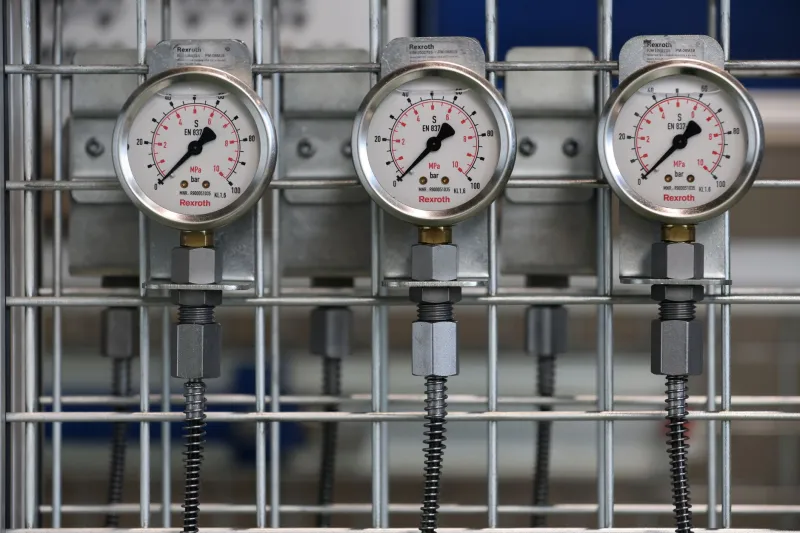
On a flat stretch of Oklahoma farmland, a cluster of microbarometers sits half-buried in the soil, surrounded by windbreak baffles and connected by buried cables to a data relay station. To a passing driver, the installation looks like a telecommunications outpost. To the atmospheric physicists who designed it, it is something closer to an ear pressed against the chest of the sky.
These instruments do not measure temperature, wind speed, or moisture content. They measure pressure oscillations below 20 hertz — sound frequencies the human auditory system cannot register. In the language of physics, this is infrasound. In the emerging language of predictive meteorology, it may become one of the most consequential tools America has for protecting lives from extreme weather.
The Acoustic Architecture of Storms
Every large atmospheric system — every tornado, tropical cyclone, or organized thunderstorm complex — produces a characteristic infrasonic signature as it develops. The turbulent mechanics of rotating air columns, the dynamics of precipitation falling through unstable layers, and the interaction of storm systems with terrain all generate subsonic pressure waves that propagate enormous distances through the lower atmosphere with relatively little attenuation.
Conventional meteorology intercepts weather at the moment it becomes visible: radar detects precipitation, satellites image cloud structure, weather balloons sample atmospheric profiles. These methods are mature and indispensable, but they are fundamentally reactive. They observe systems that have already organized into threatening structures.
Infrasound, by contrast, captures the mechanical precursors of organization — the pressure fluctuations that accompany convective initiation, jet stream interaction, and boundary layer destabilization before those processes have produced anything a radar can resolve. In controlled research settings, infrasonic sensors have detected the acoustic precursors of significant tornadoes up to forty minutes before radar-confirmed touchdowns. For hurricane intensification events — the rapid deepening cycles that have repeatedly overwhelmed forecast models — early acoustic signatures have been identified in retrospective analysis of archived sensor data hours before satellite imagery showed corresponding structural changes.
Array Science and the Challenge of Signal Extraction
The central technical challenge is not detection but discrimination. The low-frequency acoustic environment is extraordinarily crowded. Ocean microseisms, surf noise, industrial machinery, aircraft, and natural wind turbulence all contribute to a broadband infrasonic background that can mask the comparatively subtle signatures of developing weather systems.
Research teams at institutions including the University of Mississippi's National Center for Physical Acoustics and the NOAA Earth System Research Laboratory have spent the past decade developing array processing algorithms capable of isolating meteorological signals from this background. The approach borrows heavily from seismological array methods — using the slight time delays between signals arriving at spatially separated sensors to determine the direction and apparent velocity of incoming wavefronts, thereby distinguishing weather-associated infrasound from local noise contamination.
The computational demands of this signal processing were prohibitive a decade ago. The convergence of inexpensive, high-precision MEMS pressure sensors with edge computing hardware and machine learning-based signal classifiers has fundamentally altered the economics of the problem. Arrays that once required dedicated supercomputer access to process in near-real-time can now operate semi-autonomously on ruggedized field hardware.
The Disaster Preparedness Dividend
The implications for American communities in severe weather corridors are difficult to overstate. The US experiences more tornadoes annually than any other country, with the greatest concentrations in the Southern Plains, the Mid-South, and the Ohio Valley. Hurricane-related fatalities and economic losses have increased in recent decades, driven by coastal population growth and, increasingly, by the accelerating intensity of storms in a warming climate.
Current public warning systems are constrained by the physics of radar detection. The average lead time for tornado warnings issued by the National Weather Service is approximately thirteen minutes. For communities with inadequate shelter infrastructure — mobile home parks, rural areas without public storm shelters, urban neighborhoods where basement construction is uncommon — thirteen minutes is frequently insufficient for protective action.
Extending actionable lead time to thirty, sixty, or ninety minutes does not merely improve the odds of survival in any individual event. It restructures the entire logic of emergency management. With longer lead times, school districts can dismiss students before conditions deteriorate. Hospitals can secure facilities and accelerate patient transfers. Transportation authorities can implement contraflow operations for coastal evacuations before highway networks become saturated.
Researchers modeling the integration of infrasound networks into existing warning architectures project that even a modest improvement in lead time — fifteen additional minutes on average — could reduce tornado fatality rates by a meaningful percentage in the highest-risk regions, simply by expanding the window for protective behavior.
Building the National Listening Network
The United States currently operates a sparse national infrasound monitoring network, maintained primarily for the purpose of detecting clandestine nuclear tests under the Comprehensive Nuclear-Test-Ban Treaty framework. This network was not designed for meteorological application, and its station spacing — hundreds of miles between nodes in many regions — is insufficient for the spatial resolution that weather forecasting demands.
Several research consortia are now making the case for a purpose-built meteorological infrasound network, with proposed station spacings of fifty to one hundred miles across high-risk regions. The cost estimates for such a system are substantial but not extraordinary relative to the annual economic losses attributable to severe weather in the United States, which routinely exceed tens of billions of dollars in active seasons.
The more immediate pathway may be opportunistic integration — embedding infrasound sensors into existing infrastructure nodes such as water treatment facilities, electrical substations, and transportation monitoring stations, which already maintain power supplies and data connections across the geographic areas of greatest interest.
What the Sky Has Always Been Saying
There is a certain conceptual elegance to the premise of atmospheric acoustics as a predictive discipline. The atmosphere has always been generating these signals. Every storm system that has ever crossed the American continent has done so while broadcasting its mechanical state in frequencies below human perception. The science is not creating new information; it is developing the instruments and algorithms to read information that has existed, uninterpreted, for as long as there have been storms.
By 2030, the question facing policymakers and infrastructure planners is not whether infrasound monitoring can contribute to disaster preparedness — the physics are not in serious dispute. The question is whether the institutional will exists to fund the network density, computational infrastructure, and forecast model integration necessary to translate laboratory science into operational warning capability. The storms will continue to announce themselves. The challenge is learning, at last, to listen.