Beneath the Surface: How American Scientists Are Turning Farmland Into a Carbon Archive
For most of the last century, American agriculture treated soil as a medium — a passive substrate into which seeds were planted and from which yields were extracted. Fertilizers compensated for what the land lacked. Pesticides managed what it could not suppress on its own. The ground itself was, in the dominant agricultural imagination, largely inert.
That assumption is being systematically dismantled.
Across a constellation of university laboratories, USDA research stations, and independent institutes, a new generation of soil scientists is pursuing a fundamentally different premise: that the biological complexity already present beneath our feet, properly understood and carefully cultivated, represents one of the most powerful carbon sequestration systems on Earth. The challenge is not to invent something new. It is to engineer conditions under which ancient biological processes can operate at the scale the climate crisis demands.
The Biology of Buried Carbon
Soil is not dirt. At its most ecologically intact, a single teaspoon of healthy agricultural soil contains more microbial organisms than there are people on the planet. These organisms — bacteria, fungi, archaea, protozoa, and nematodes — form interlocking metabolic networks that decompose organic matter, cycle nutrients, and, critically, determine how much carbon remains sequestered underground versus returning to the atmosphere as carbon dioxide.
At the center of current research attention are mycorrhizal fungi: thread-like filaments that form symbiotic relationships with plant roots, extending their reach into soil volumes the roots themselves could never access. In exchange for sugars produced through photosynthesis, mycorrhizal networks deliver water and phosphorus to their host plants. But their role in carbon dynamics is what has researchers most animated. These fungi produce a sticky glycoprotein called glomalin, which binds soil particles together and, in doing so, encases organic carbon in aggregates that can resist decomposition for decades — sometimes centuries.
Researchers at the University of California, Davis, and Colorado State University are among those investigating how deliberate inoculation of agricultural soils with specific mycorrhizal strains might enhance this natural carbon-locking process. The goal is not to introduce foreign organisms, but to restore fungal communities that intensive tillage and synthetic fertilizer regimes have systematically depleted over generations of industrial farming.
Biochar and the Architecture of Persistence
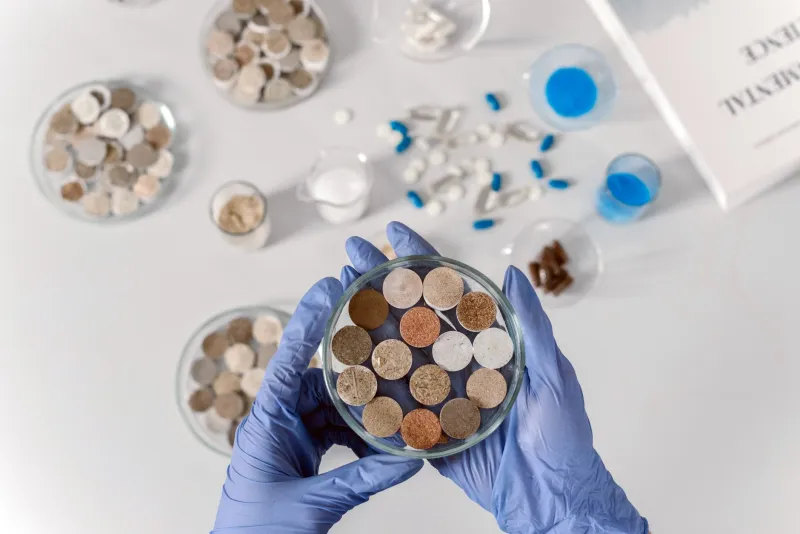
Mycorrhizal networks are not the only tool in the engineered-soil toolkit. Biochar — a form of charcoal produced by heating organic material in low-oxygen environments — has attracted considerable scientific and policy interest as a soil amendment with unusual longevity. Unlike raw organic matter, which microbes readily decompose and return to the atmosphere, biochar's molecular structure resists biological breakdown. Carbon fixed into biochar can remain stable in soil for hundreds to thousands of years.
The USDA's Agricultural Research Service has supported multiple studies examining how biochar interacts with native soil microbiomes, and the results are more nuanced than early enthusiasm suggested. Biochar alone is not a silver bullet — its effectiveness depends heavily on feedstock type, pyrolysis temperature, soil pH, and the existing microbial community. But when biochar is combined with biological inoculants, including mycorrhizal fungi and beneficial bacterial consortia, early evidence suggests the composite system outperforms either component in isolation. The char provides physical habitat and chemical stability; the biology provides metabolic function and carbon input.
Researchers at Cornell University's Soil and Crop Sciences department have been exploring what they describe as "biochar composites" — pre-inoculated amendments designed to deliver both structural and biological benefits simultaneously. The approach treats soil improvement less like a chemical application and more like an ecological transplant.
Engineering the Root-Microbe Interface
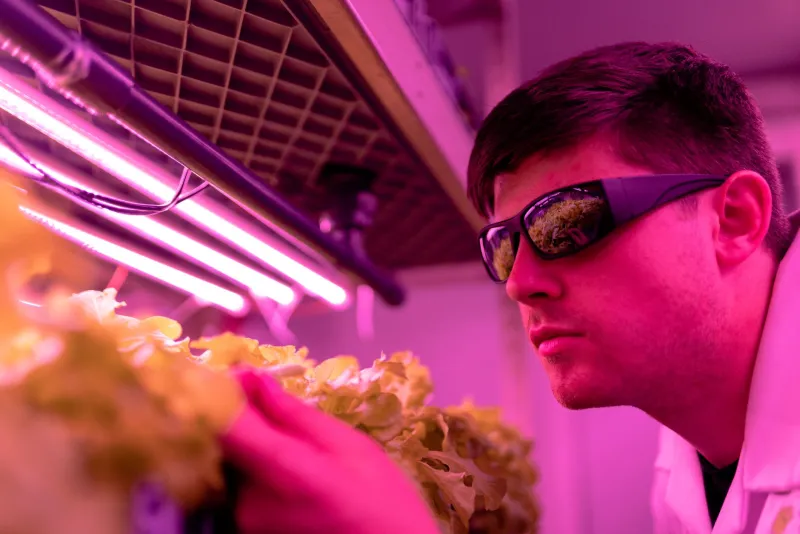
Perhaps the most frontier-facing area of this research concerns the molecular dialogue between plant roots and soil microorganisms. Plants do not passively coexist with their surrounding microbial communities — they actively shape them. Through root exudates, plants release a chemically complex mixture of sugars, amino acids, and secondary metabolites that selectively attract or suppress specific microbial populations. This process, occurring in the narrow zone immediately surrounding roots known as the rhizosphere, is among the most biologically dense environments on Earth.
Scientists are now asking whether that molecular conversation can be deliberately influenced. If plants could be encouraged — through selective breeding, targeted gene expression, or altered agronomic practices — to produce exudate profiles that recruit carbon-stabilizing microbial communities, the implications for large-scale sequestration would be substantial.
The Innovative Genomics Institute at UC Berkeley and several USDA-affiliated programs have begun mapping the exudate profiles of major American row crops, including corn, soy, and wheat, with the aim of identifying which chemical signals most reliably promote fungal and bacterial communities associated with stable carbon storage. It is painstaking work — the rhizosphere involves thousands of microbial species responding to hundreds of chemical cues simultaneously — but the research trajectory is clear.
From Experimental Plots to Continental Scale
The most pressing question facing this field is not scientific. It is logistical. American cropland covers roughly 900 million acres. Even the most optimistic laboratory results must survive translation to that scale — across radically different soil types, climates, existing microbial communities, and farming practices. A treatment that works in an Iowa research plot may behave very differently in the clay soils of the Mississippi Delta or the arid fields of the Texas Panhandle.
Scaling also requires farmer adoption, and that requires economics. Soil amendments cost money to produce and apply. The carbon markets that might theoretically compensate farmers for sequestration services remain inconsistent in their measurement standards and unreliable in their pricing. Several initiatives, including the USDA's Regional Conservation Partnership Program, are attempting to build financial frameworks that make soil carbon sequestration economically rational for working farms. Progress is real but uneven.
There is also the matter of measurement. Carbon sequestered in soil is notoriously difficult to quantify with the precision that credible carbon markets require. Emerging sensor technologies and satellite-assisted soil monitoring are beginning to close that verification gap, but the field has not yet produced the standardized, auditable measurement infrastructure that would allow soil carbon to function as a reliable climate commodity.
America's Most Overlooked Climate Asset
What is striking about engineered soil science is how thoroughly it has been overshadowed in the broader climate conversation by higher-profile interventions — direct air capture machines, offshore wind installations, next-generation nuclear reactors. These technologies command attention in part because they are visible. Carbon trapped in a mycorrhizal aggregate forty centimeters underground does not photograph well.
But the numbers are not easily dismissed. Some modeling studies suggest that restoring degraded agricultural soils to higher organic carbon levels across the United States alone could offset a meaningful fraction of current annual emissions — not as a complete solution, but as a significant contributor within a diversified climate strategy.
By 2030, the research programs currently underway may have produced enough field-validated data to support large-scale policy intervention. Whether the agricultural system, the carbon markets, and the political will align to act on that data remains an open question. What is no longer open is whether the biology is capable. The science beneath our feet, it turns out, has been performing this function for millions of years. The work of the coming decade is to help it do so with purpose.