Underground Intelligence: America's Race to Map the Microbial Networks That Feed the World
Underground Intelligence: America's Race to Map the Microbial Networks That Feed the World
The most consequential infrastructure in American agriculture has never appeared on a farm map. It has no steel, no fiber optic cable, no concrete. It exists in the top few inches of soil — a labyrinthine network of microorganisms exchanging nutrients, chemical signals, and genetic material at a scale and complexity that rivals anything human engineers have constructed above ground. Scientists are beginning to call it, only half-metaphorically, the living internet.
For decades, the soil microbiome occupied the margins of agricultural science. Farmers understood, intuitively, that healthy soil meant healthy crops. But the mechanisms beneath that intuition — the precise identities of the billions of microbial actors, the metabolic transactions they conduct, the conditions that sustain or collapse them — remained largely opaque. That opacity is now ending, rapidly and consequentially.
Decoding the Dark Matter of Agriculture
At the Department of Energy's Joint Genome Institute (JGI) in Walnut Creek, California, researchers have spent the better part of a decade developing metagenomic sequencing pipelines capable of identifying microbial species and their functional genes directly from soil samples — no laboratory culturing required. The significance of this cannot be overstated. Fewer than one percent of soil microbes can be grown in a lab. Traditional microbiology, for all its power, was essentially blind to the other ninety-nine.
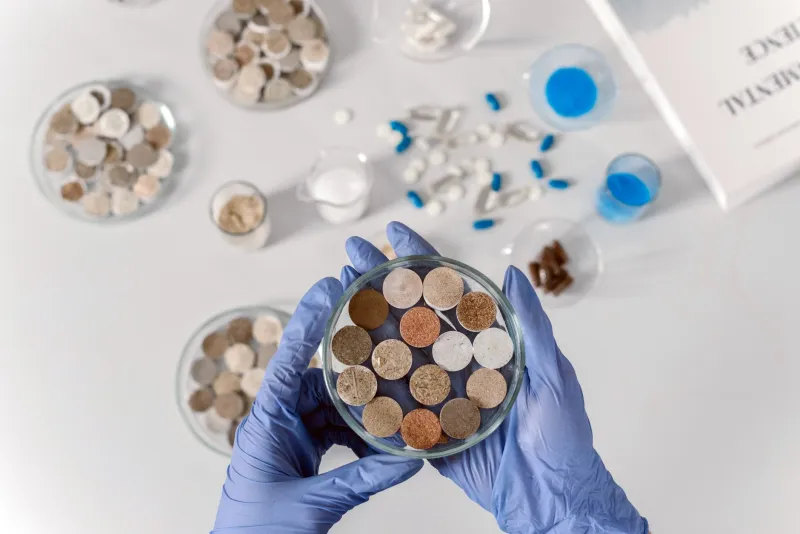
The JGI's Earth Microbiome Project contributions, alongside parallel efforts at the Department of Agriculture's Agricultural Research Service, have produced reference databases of staggering depth. Researchers can now submit a soil core from an Iowa cornfield or a California almond grove and receive, within weeks, a detailed compositional portrait: which bacterial phyla dominate, which fungal networks are active, which metabolic pathways are operating, and crucially, how those profiles compare to soils that are thriving versus degrading.
What emerges from this data is a picture of extraordinary ecological specificity. The microbial community beneath a wheat field in Kansas is not merely different from the community beneath a longleaf pine forest in Georgia — it is organized according to entirely different functional logic, shaped by decades of land use, precipitation patterns, tillage history, and fertilizer chemistry. Mapping that specificity, at national scale, is precisely what a new cohort of research initiatives is attempting.
From Sequencing to Sensing: The Distributed Soil Grid
Genomic data alone cannot capture a living system in motion. Soil microbial communities shift seasonally, respond to rainfall events within hours, and react to root exudates — the chemical compounds plants secrete into the rhizosphere — in real time. To track these dynamics, researchers are pairing genomic tools with in-ground sensor networks capable of continuous environmental monitoring.
Several MIT spinouts, alongside established agricultural technology firms, are now deploying wireless soil sensor arrays that measure moisture, temperature, pH, dissolved organic carbon, and nitrogen cycling rates at centimeter-level resolution. When these data streams are layered against metagenomic snapshots taken at intervals throughout a growing season, researchers begin to see something genuinely new: the metabolic pulse of a soil community responding to its environment.
The Innovative Genomics Institute at UC Berkeley has been developing CRISPR-based biosensors designed to detect specific microbial metabolites in situ — essentially embedding biological indicators directly into the soil that can signal, via electrochemical output, when nitrogen fixation rates are falling or when pathogen-suppressing fungi are declining. Early field trials in Northern California have demonstrated detection sensitivity that no conventional soil test can approach.
The aggregate vision — a distributed, continuously updated map of soil biological activity across American agricultural land — is what researchers at the USDA's Natural Resources Conservation Service have begun referring to as a living soil grid. The analogy to telecommunications infrastructure is deliberate. Just as the electrical grid made industrial-scale energy distribution possible, a living soil grid could make precision biological land management possible: knowing, in near-real time, which fields need microbial inoculants, which are sequestering carbon effectively, and which are approaching biological collapse.
The Carbon Accounting Dimension
The implications extend well beyond crop yields. Soil holds roughly twice as much carbon as the atmosphere, and the microbial communities within it are the primary regulators of how much of that carbon stays locked in stable organic compounds versus being respired back into the air as CO₂. American climate policy increasingly depends on soil carbon sequestration as a credible offset mechanism — but current accounting methods are notoriously imprecise.
Researchers at Colorado State University and the Lawrence Berkeley National Laboratory have been developing microbially-explicit carbon models: predictive frameworks that incorporate the metabolic activities of specific microbial guilds to forecast how soil carbon stocks will respond to management interventions, temperature increases, and precipitation shifts. These models, validated against field data collected from sites across the Great Plains and the Pacific Northwest, are substantially outperforming conventional carbon accounting approaches.
For federal land managers and the agricultural carbon market — a sector that has attracted considerable private investment in recent years — this matters enormously. Credible, biologically-grounded carbon accounting could unlock financing for soil restoration at a scale that voluntary markets have so far been unable to sustain.
Engineering the Underground
Mapping the soil microbiome is one ambition. Actively engineering it is another, more contested one. A growing number of biotechnology companies, many of them founded by researchers from leading US land-grant universities, are developing microbial consortia — carefully assembled communities of bacteria and fungi — designed to be introduced into agricultural soils to perform specific functions: fixing atmospheric nitrogen, solubilizing phosphorus, suppressing soilborne pathogens, or enhancing drought tolerance in host crops.
The regulatory landscape for these biological soil amendments remains complex. The EPA and USDA share oversight jurisdiction, and the distinction between naturally occurring microbial strains and genetically modified variants carries significant legal weight. Researchers and industry advocates have been pressing for updated federal guidance that reflects the current pace of development — frameworks designed for an earlier era of microbial products are, by most accounts, poorly suited to evaluating consortia of dozens of interacting species.
The science, in the meantime, is advancing. Field trials conducted by Pivot Bio in the Midwest have demonstrated measurable yield improvements in corn from nitrogen-fixing bacterial inoculants, reducing synthetic fertilizer requirements by meaningful margins. Indigo Agriculture has published data suggesting that certain microbial seed treatments improve water use efficiency under drought conditions — a finding with obvious relevance as American agriculture confronts increasingly volatile precipitation patterns.
What 2030 Looks Like Underground
The trajectory of this research points toward a near-future in which soil biological health is monitored, reported, and managed with the same institutional seriousness currently applied to surface-level agronomic inputs. Federal conservation programs could incorporate microbiome health scores into eligibility criteria. Carbon markets could price soil offsets based on verified biological activity rather than modeled estimates. Farmers could receive real-time alerts — from sensor networks integrated with predictive biological models — indicating when a specific field's microbial community is shifting in ways that presage yield loss.
None of this is speculative in the sense of being distant. The foundational science is largely in place. What remains is the work of translation: moving from research-grade tools to field-deployable systems, from academic data to policy-relevant frameworks, from proof-of-concept trials to national-scale deployment.
America's soil is not an inert substrate. It is an ecosystem — ancient, complex, and increasingly legible. The scientists learning to read it are not merely advancing agricultural science. They are mapping a resource that will determine, in no small part, whether the country's food systems and climate commitments remain viable through the middle of this century and beyond. The living internet beneath our feet has been operating for millennia. We are only now learning its language.