Air as Aquifer: The Materials Revolution That Could End Geographic Water Scarcity
For most of American history, water scarcity has been treated as a geographic sentence. If your city sits atop a shrinking aquifer or downstream from an over-allocated river, the policy conversation tends to revolve around rationing, conservation, and managed decline. What it rarely considers is the atmosphere directly overhead — a planetary reservoir holding an estimated 12.9 trillion liters of water at any given moment, perpetually replenished, entirely untapped at scale.
That calculation is beginning to change. Across research institutions from Arizona State University to Lawrence Berkeley National Laboratory, a discipline once confined to survival manuals and emergency preparedness kits is being reimagined as legitimate infrastructure science. The question researchers are now asking is not whether air can yield drinking water, but whether the materials and systems exist to make it happen cheaply, reliably, and at the volumes that cities actually require.
The answer, increasingly, appears to be yes.
The Problem With Conventional Water Thinking
The American West's water crisis is well documented. The Colorado River, which supplies drinking water to roughly 40 million people across seven states, has been legally over-allocated for decades. Lake Mead and Lake Powell — the two largest reservoirs in the country — have oscillated near historic lows since the early 2020s. Municipal water authorities in Phoenix, Las Vegas, and Los Angeles are operating under mandatory reduction agreements that would have seemed politically unthinkable a generation ago.
Conventional responses — desalination plants, long-distance pipeline projects, aggressive groundwater banking — share a common limitation: they remain tethered to existing hydrological infrastructure. They move water from one stressed source to another, or extract it from geological formations that took millennia to fill. None of them produce water from a source that is genuinely unlimited and locally available.
Atmospheric water generation does.
Metal-Organic Frameworks: The Architecture of Extraction
At the molecular level, the most promising advance in atmospheric water harvesting involves a class of crystalline materials known as metal-organic frameworks, or MOFs. These porous structures — assembled from metal ions linked by organic molecules — can be engineered to adsorb water vapor with extraordinary selectivity, even at relative humidity levels as low as 20 percent, conditions typical of desert environments.
Researchers at MIT and UC Berkeley have demonstrated MOF-based systems capable of producing meaningful quantities of water from arid air using nothing more than ambient temperature cycling and passive solar energy. A device developed in collaboration with these institutions captured approximately 2.8 liters of water per kilogram of MOF material per day under Mojave Desert conditions — a figure that, while modest in isolation, scales dramatically when integrated into panel arrays the size of rooftop solar installations.
The federal government has taken notice. The Department of Energy's Advanced Research Projects Agency-Energy (ARPA-E) has directed funding toward MOF optimization programs specifically targeting low-humidity performance thresholds, with the stated ambition of reaching cost parity with municipal water delivery by the early 2030s. That benchmark — around one dollar per cubic meter — remains the industry's defining challenge, but materials engineers argue that manufacturing advances in MOF synthesis are compressing the timeline faster than early projections suggested.
Biomimetic Systems: What Beetles and Cacti Already Know
Not every atmospheric harvesting solution begins in a chemistry laboratory. Some of the most elegant engineering insights have come from biology.
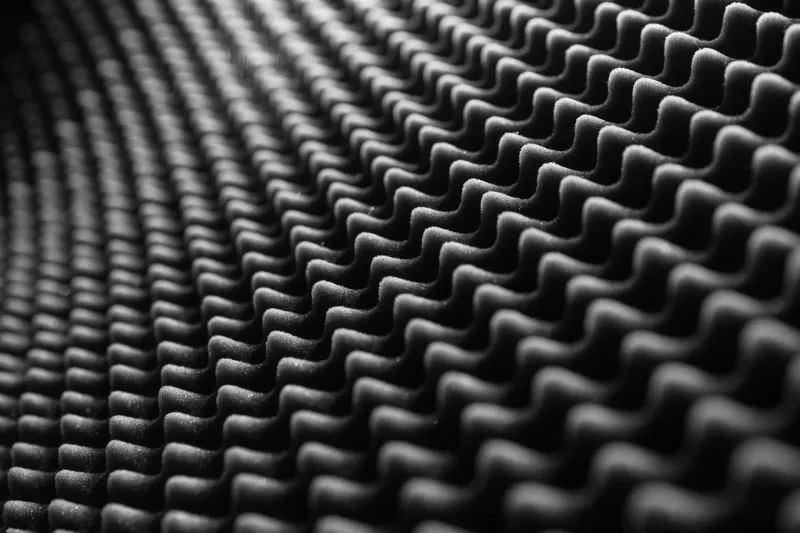
The Namib Desert beetle has survived in one of Earth's driest environments for millions of years by collecting fog on its textured back — a surface architecture of hydrophilic peaks and hydrophobic valleys that channels microscopic water droplets toward the beetle's mouth before they can re-evaporate. The Sonoran cactus achieves something similar through its spine geometry, guiding condensed moisture down toward the root zone with minimal energy expenditure.
Biomimetic engineering groups at institutions including Stanford's Department of Mechanical Engineering and the University of Texas at Austin are translating these evolutionary strategies into manufacturable surfaces. Electrospun polymer membranes, laser-etched metal sheets, and 3D-printed fog-collection meshes are among the prototypes under active development. Several of these systems have been deployed in field trials across rural communities in New Mexico and West Texas, where municipal water infrastructure is either absent or unreliable.
The advantage of passive biomimetic systems is their operational simplicity. They require no electricity, no moving parts, and no consumable materials beyond periodic cleaning. For remote communities and emergency infrastructure applications, this represents a meaningful resilience dividend that complements rather than competes with more technologically intensive approaches.
Solar-Driven Generators and the Startup Landscape
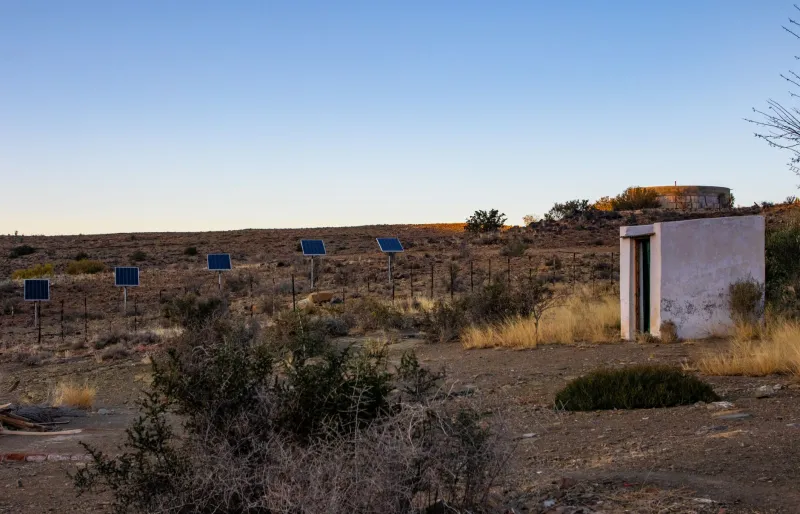
Between the passive elegance of biomimetic collectors and the molecular precision of MOF arrays sits a growing commercial sector: solar-driven atmospheric water generators. Companies including SOURCE Global (headquartered in Scottsdale, Arizona) have developed hydropanel systems that use solar thermal energy to drive water vapor absorption and condensation cycles, producing potable water with no grid connection and no local water source required.
SOURCE's installations now operate in more than 50 countries, with domestic deployments concentrated in water-stressed regions of the American Southwest and in off-grid Indigenous communities where pipeline infrastructure has historically been absent or inadequate. The Navajo Nation, where an estimated 30 to 40 percent of residents have lacked reliable access to running water, has become a significant testing ground for these systems — a deployment context that carries both humanitarian urgency and genuine scientific value.
The startup ecosystem surrounding atmospheric water generation has attracted venture investment from climate-focused funds, and several DOE Small Business Innovation Research grants have been directed toward early-stage companies working on next-generation sorbent materials and condensation optimization. The commercial pipeline is not yet mature, but the investment signals suggest that the sector is being taken seriously beyond the research community.
From Laboratory to Infrastructure: The 2030 Horizon
For atmospheric water harvesting to function as genuine infrastructure rather than supplemental technology, several conditions must converge. Material costs must continue to fall. Manufacturing processes must scale. Regulatory frameworks — currently fragmented across state water agencies that were never designed to accommodate airborne water rights — must evolve to accommodate a resource category that does not fit existing legal definitions.
That last challenge may prove as consequential as any engineering problem. Water law in the American West is among the most complex and contested bodies of property law in the country. Atmospheric water currently occupies a legal gray zone in most jurisdictions, and resolving that ambiguity will require deliberate legislative attention at both state and federal levels.
The scientific momentum, however, is unmistakable. What was a marginal research curiosity a decade ago now commands dedicated laboratory programs, federal investment portfolios, and a commercial sector with real deployments and measurable outputs. The atmosphere, it turns out, has always been a water source. The work of the next decade is simply building the systems sophisticated enough to use it.
For a country renegotiating its relationship with a finite hydrological inheritance, that may be among the most consequential infrastructure investments of the coming decade — not a replacement for conservation or efficiency, but a genuinely new column in the water budget, drawn from a reservoir that does not deplete.