Light into Carbon: 7 American Research Ventures Engineering Photosynthesis Beyond Nature's Limits
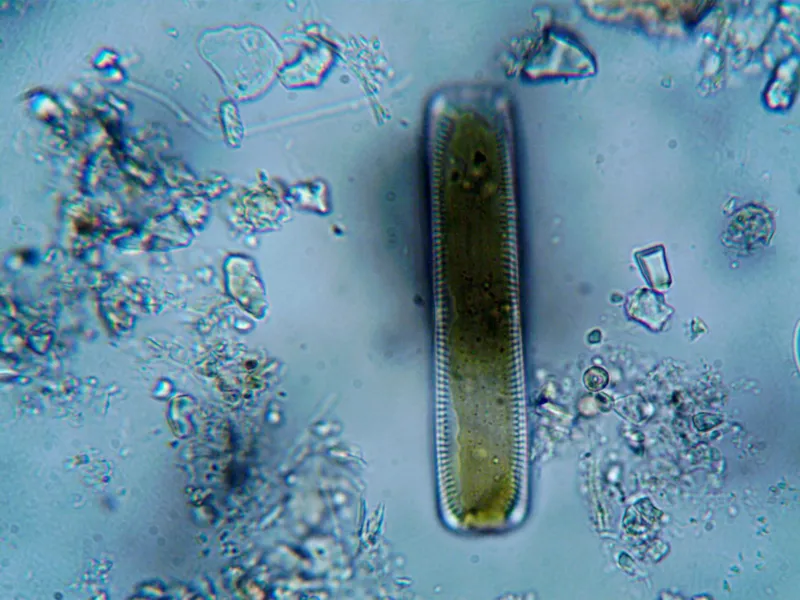
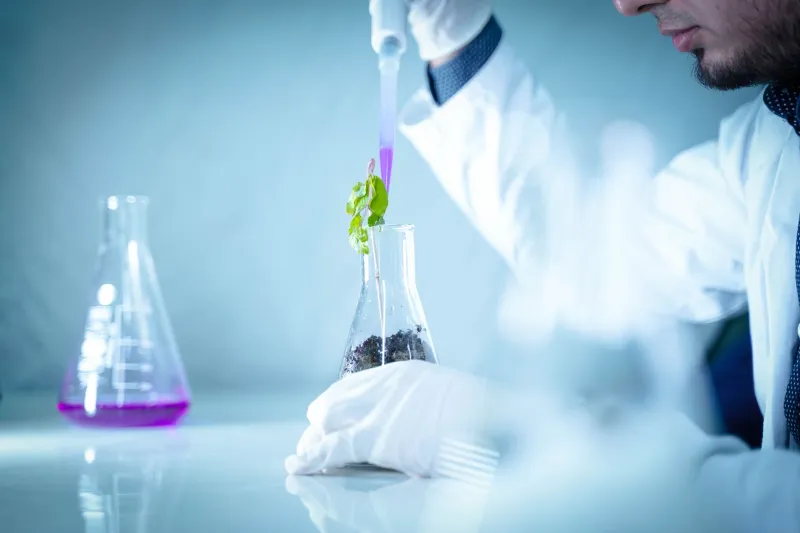
Photosynthesis is, in one sense, the most successful technology in the history of life on Earth. It has powered nearly every ecosystem, fed nearly every food chain, and sequestered atmospheric carbon for over three billion years. It is also, by the standards of modern engineering, remarkably inefficient. Most crop plants convert less than two percent of incident sunlight into usable biomass. The theoretical ceiling is closer to twelve percent.
That gap represents one of the most consequential engineering opportunities of the coming decade. Across the United States, a growing cohort of research institutions and startup ventures is working to close it—developing synthetic photosynthesis platforms that exceed what evolution has produced, with applications spanning carbon capture, renewable materials, food production, and climate strategy.
The following seven initiatives represent the leading edge of this effort. Each approaches the problem from a distinct angle, but all share a common conviction: that redesigning the chemistry of photosynthesis is not merely a scientific curiosity but a practical imperative for the world of 2030 and beyond.
1. Joule Unlimited's Solar-to-Fuel Bioconversion Platform
Based in Massachusetts, Joule Unlimited has spent years developing photosynthetic microorganisms—primarily engineered cyanobacteria—that convert sunlight and CO₂ directly into liquid fuels and chemical feedstocks. Unlike conventional biofuel pathways, which require growing, harvesting, and processing biomass, Joule's organisms secrete usable fuel products continuously, eliminating several energy-intensive steps.
The company's approach is notable for its land-use efficiency. By operating in closed photobioreactor systems rather than open fields, it sidesteps the water, pesticide, and soil degradation costs associated with conventional agriculture. Current research efforts are focused on scaling reactor throughput and improving the organisms' tolerance for the high-light, high-CO₂ conditions that maximize productivity.
2. Salk Institute's Harnessing Plants Initiative
The Salk Institute for Biological Studies in La Jolla, California, has launched one of the most ambitious plant-engineering programs in the country. Its Harnessing Plants Initiative is developing crops with significantly enhanced root systems capable of storing far greater quantities of carbon in the soil—a strategy that addresses both agricultural productivity and atmospheric carbon concentration simultaneously.
By engineering plants to produce more suberin, a carbon-rich polymer found naturally in root cells, Salk researchers aim to create crops that sequester substantially more carbon per acre than conventional varieties while maintaining or improving yield. Field trials are ongoing, with wheat, corn, soy, and canola among the target species. The initiative frames its work explicitly as a climate intervention at agricultural scale.
3. Pivot Bio's Nitrogen-Photosynthesis Integration Research
Pivot Bio, headquartered in Berkeley, California, is approaching enhanced photosynthesis from the nutrient side. The company has developed microbial products that restore nitrogen-fixing capabilities to the root microbiome of major crops—reducing the need for synthetic nitrogen fertilizers, which are both energy-intensive to produce and a significant source of agricultural greenhouse gas emissions.
The connection to photosynthesis efficiency is direct: nitrogen is a critical component of chlorophyll and the enzyme complexes responsible for carbon fixation. Plants with better nitrogen access operate their photosynthetic machinery more effectively. Pivot Bio's current research pipeline is exploring how engineered microbial communities can be tuned to specific crop varieties and regional soil conditions, maximizing the photosynthetic dividend of improved nitrogen availability.
4. Checkerspot's Microalgae Biomaterial Engineering Program
Checkerspot, a materials biotechnology company based in Oakland, California, is developing microalgae strains engineered to produce high-value lipid compounds at accelerated rates. These compounds serve as feedstocks for performance materials—including specialty polymers, lubricants, and composites—that currently depend on petroleum-derived inputs.
The company's photosynthesis engineering work focuses on redirecting the carbon fixed by algae away from cellular growth and toward lipid accumulation, effectively turning the organisms into highly efficient biological refineries. Because the process runs on sunlight and CO₂, the resulting materials carry a significantly lower carbon footprint than their petrochemical equivalents. Checkerspot is also exploring food-grade applications for its algae-derived compounds, targeting the functional ingredients market.
5. Mango Materials' Methane-to-Bioplastic Photosynthesis Loop
Mango Materials, a San Francisco Bay Area startup, has developed a process that uses methanotrophic bacteria—organisms that consume methane as their carbon and energy source—to produce polyhydroxyalkanoates (PHAs), a class of biodegradable bioplastics. While the organisms themselves are not photosynthetic, the system is designed to integrate with biogas streams from wastewater treatment and agricultural waste, creating a carbon-cycling loop with photosynthesis at its foundation.
Current research is focused on improving PHA yield per unit of methane consumed and reducing the cost of downstream processing. The company's roadmap envisions deployment at municipal wastewater facilities across the US, where methane produced by anaerobic digestion—itself a product of organic matter originally built through photosynthesis—becomes the feedstock for a carbon-negative materials production system.
6. Evolved by Nature's Silk-Based Carbon Fixation Research
Evolved by Nature, a Cambridge, Massachusetts company, has pioneered a platform based on activated silk—a naturally photosynthesis-derived biopolymer derived from silkworm cocoons—as a substrate for next-generation biomaterials. The company's research program is exploring how silk's unique molecular architecture can be modified to enhance its performance in applications ranging from medical devices to textile coatings.
The carbon story here is embodied: silk is built from amino acids synthesized by silkworms fed on mulberry leaves, which capture atmospheric carbon through photosynthesis. Evolved by Nature is working to extend the efficiency of this biological supply chain, developing protocols for enhanced mulberry cultivation and silkworm productivity that increase the carbon-per-acre yield of the system.
7. Calysta's Gas Fermentation and Synthetic Carbon Fixation Platform
Calysta, which operates research facilities in the United States and internationally, has developed a fermentation platform that uses methanotrophic bacteria to convert natural gas or biogas into FeedKind—a high-protein animal feed ingredient. The process bypasses conventional photosynthesis entirely, instead fixing carbon from methane through a synthetic biological pathway optimized for efficiency.
For the purposes of the broader synthetic photosynthesis landscape, Calysta's significance lies in its demonstration that alternative carbon fixation pathways can be scaled to commercial production volumes. The company's protein product is already in use in aquaculture and livestock feed markets, reducing pressure on conventional fishmeal and soy-based feed ingredients—both of which impose significant land-use and photosynthetic resource costs.
The Convergence Ahead
These seven ventures represent distinct approaches to a shared challenge: how to harness, enhance, and in some cases replace the photosynthetic process that has powered biological productivity for eons. What unites them is a recognition that the agricultural and energy systems of 2030 cannot be built on the efficiency levels that nature has provided.
The convergence of synthetic biology, computational protein design, and advanced fermentation engineering is compressing the timeline between laboratory proof-of-concept and commercial deployment. Federal investment, including through the Department of Energy's Bioenergy Technologies Office and the USDA's Agricultural Research Service, is accelerating that timeline further.
The implications extend well beyond agriculture. A world in which photosynthesis—natural and engineered—operates at significantly higher efficiency is a world with more biomass, more sequestered carbon, more renewable materials, and more options for feeding a population that will approach ten billion by mid-century. The science is not yet complete. But the direction is clear, and the urgency is beyond dispute.