Beyond the Skull: What Neural Mapping Reveals About the Future of Distributed Cognition
Photo: neural network brain mapping neuroscience digital mind technology, via c8.alamy.com
The human brain contains approximately 86 billion neurons, connected by roughly 100 trillion synapses, operating through electrochemical processes that neuroscience has spent more than a century attempting to characterize. Despite that effort, the relationship between neural architecture and subjective experience—between the physical structure of the brain and the phenomenon of consciousness—remains one of the most resistant problems in all of science. What has changed, dramatically and recently, is the resolution at which researchers can observe that architecture. And that change is beginning to push the field into territory that is simultaneously more empirical and more philosophically verifiable than anything that preceded it.
Neural mapping—the systematic charting of neural connectivity, activity patterns, and functional organization at scales ranging from individual synapses to whole-brain networks—has advanced in the past decade at a rate that few anticipated. The Human Connectome Project, funded by the National Institutes of Health, produced the most detailed map of large-scale human brain connectivity ever assembled. Subsequent projects have pushed resolution further, with some research groups now capable of mapping complete neural circuits in model organisms at single-synapse precision. The question driving a growing cohort of American researchers is whether this mapping enterprise, pursued to sufficient depth, will eventually yield something more than a descriptive account of how brains work—whether it might enable, in some form, the functional replication or extension of cognitive processes beyond biological tissue.
What Mapping Actually Measures
Before engaging with the more speculative dimensions of this inquiry, it is important to be precise about what neural mapping does and does not currently achieve. Connectomics—the branch of neuroscience dedicated to mapping complete wiring diagrams of neural systems—produces structural connectivity data: which neurons connect to which other neurons, through what types of synapses, and with what approximate synaptic weights. This is enormously valuable information, but it is not, by itself, a complete account of neural function.
Neural computation depends not only on connectivity but on the dynamic, time-varying patterns of electrical activity that propagate through connected networks. It depends on neuromodulatory systems that alter the effective strength of connections in response to behavioral state, attention, and experience. It depends on glial cells, whose roles in neural signaling are still being elucidated. A structural connectome is, to use an imperfect analogy, like a wiring diagram for a computer: essential, but insufficient to explain what the machine computes or why.
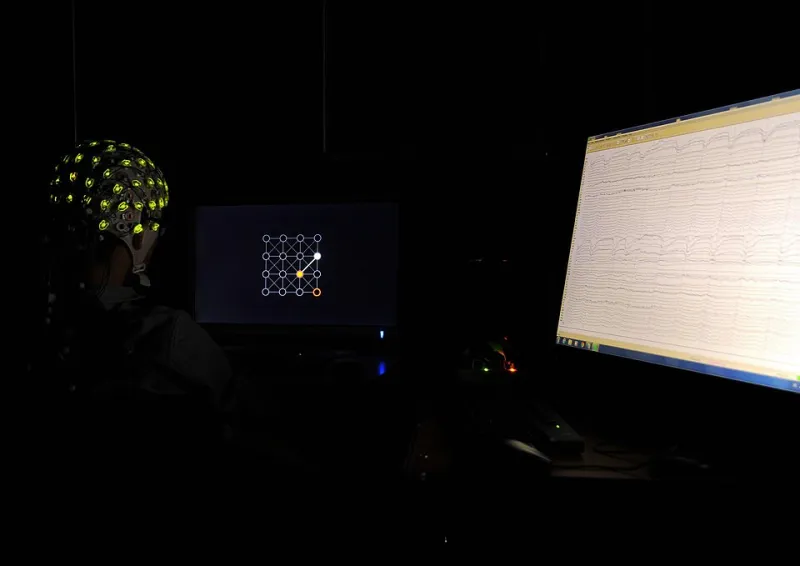
Functional mapping methods—including functional magnetic resonance imaging, electrocorticography, and multi-electrode array recording—add temporal and activity-based information to the structural picture. The integration of structural and functional mapping data, enabled by advances in computational neuroscience and machine learning, is what has begun to make the field feel genuinely transformative. Researchers are not merely cataloging connections; they are beginning to identify the computational motifs—the recurring circuit patterns that implement specific cognitive operations—that appear to be conserved across individuals and, in some cases, across species.
The Substrate Independence Hypothesis
At the center of the more speculative research agenda is a philosophical position known as substrate independence, or sometimes functionalism: the view that what matters for cognition is not the physical material from which a cognitive system is constructed but the functional organization of that system. On this view, if the functional architecture of a human cognitive process—say, working memory, or attentional selection—could be reproduced in silicon, photonic, or neuromorphic hardware with sufficient fidelity, the resulting system would instantiate that cognitive process in a meaningful sense.
Substrate independence is not a fringe position. It has been seriously defended by philosophers of mind for decades and is implicitly assumed by much of the computational neuroscience enterprise. What is new is that the empirical tools to test it are beginning to materialize. Several American research groups, including teams at academic institutions and federally funded research centers, are developing neuromorphic computing architectures—hardware systems designed to replicate the computational principles of biological neural circuits—and evaluating whether these systems can reproduce specific cognitive functions when initialized with connectivity data derived from biological neural mapping.
The results to date are partial and preliminary. Neuromorphic systems can replicate certain low-level neural computations with impressive fidelity. Reproducing the higher-order, context-dependent, and phenomenologically rich cognitive processes that characterize human consciousness remains far beyond current capability. But the trajectory of the research is toward increasing sophistication, and the question of whether there is a principled ceiling on that trajectory—or merely a practical one—is one that no honest scientist can yet answer.
Distributed Cognition as a Medical Frontier
Before reaching the more philosophically verifiable questions about consciousness and identity, distributed cognition has immediate and less contested medical applications that are already shaping research priorities. For patients with severe traumatic brain injury, neurodegenerative disease, or stroke-related cognitive impairment, the prospect of offloading specific cognitive functions to external computational systems is not a thought experiment—it is a therapeutic target.
Research programs developing cognitive prosthetics—devices that interface with residual neural tissue to restore or supplement lost cognitive function—are explicitly grounded in neural mapping. Understanding the circuit-level basis of memory encoding, for example, has enabled experimental hippocampal prosthetics that can partially restore memory formation in patients with hippocampal damage. These devices do not replicate consciousness; they perform a specific computational function that the damaged tissue can no longer perform. But they represent a proof of concept for the broader thesis: that cognitive functions can, in principle, be partially instantiated outside biological tissue.
The Identity Question and Its Institutional Implications
As neural mapping advances and cognitive prosthetics become more sophisticated, a question that has long been confined to philosophy seminars is beginning to demand practical answers: if elements of a person's cognition are distributed across biological and artificial substrates, in what sense is that person's identity preserved, threatened, or transformed?
American bioethics institutions, including several affiliated with major medical schools and the Presidential Commission for the Study of Bioethical Issues, have begun engaging with this question in preliminary ways. The frameworks developed for evaluating the ethics of brain-computer interfaces—focused primarily on privacy, autonomy, and informed consent—are insufficient for the more radical scenarios that neural mapping research may eventually make possible.
By 2030, the field is unlikely to have resolved these questions. But it is likely to have sharpened them considerably. The maps being drawn today in neuroscience laboratories across the United States are not merely scientific documents. They are the first drafts of a new understanding of what human cognition is—and what it might become when the skull is no longer its only possible home.