Ahead of the Thought: How Brain-Computer Interfaces Are Learning to Decode What You Haven't Yet Decided
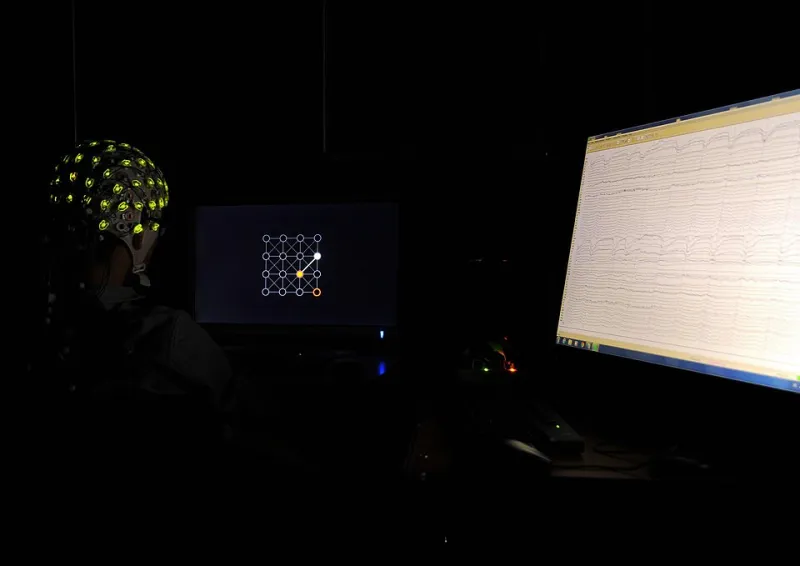
Photo: Laurens R. Krol, CC BY 4.0, via Wikimedia Commons
There is a moment—measured not in seconds but in fractions of them—when the brain commits to an action before the person doing it is aware of any decision at all. Neuroscientists have known about this temporal gap since the 1980s, when researcher Benjamin Libet demonstrated that neural preparation for voluntary movement precedes conscious awareness by several hundred milliseconds. For decades, that finding remained largely a philosophical curiosity. Today, it has become an engineering target.
Across American universities, federal research programs, and a growing cluster of neurotechnology companies, scientists are building systems capable of detecting and interpreting these pre-conscious neural signals—not to record what the brain has decided, but to anticipate what it is preparing to decide. The implications are sweeping, and the science is advancing faster than most observers expected.
The Gap Between Intention and Awareness
Conventional brain-computer interfaces, or BCIs, have historically operated in a reactive mode. A user consciously attempts to move a limb or generate a mental command; electrodes detect the resulting neural activity; and software translates that activity into a digital output—moving a cursor, activating a prosthetic, or composing a text message. The system follows the brain.
Predictive decoding inverts this relationship. Rather than waiting for a fully formed neural command, next-generation systems are trained to recognize the precursor patterns that emerge in the brain's motor planning regions—the pre-supplementary motor area and the dorsal premotor cortex, among others—before the decision crystallizes into conscious intention. The system, in effect, reads the draft before the final copy is written.
This is not science fiction. Researchers at institutions including the University of California San Francisco, Carnegie Mellon, and the BrainGate consortium have published findings demonstrating that high-density electrode arrays can detect directional movement intentions with meaningful accuracy up to 200 milliseconds before a subject consciously initiates action. In neurological time, that is an enormous window.
Restoring Agency, One Millisecond at a Time
The most immediate and least contested application of predictive neural decoding is in the clinic. For patients living with amyotrophic lateral sclerosis, spinal cord injuries, or the locked-in syndrome associated with late-stage neurological disease, even marginal improvements in interface responsiveness translate directly into restored quality of life.
Current BCIs require sustained cognitive effort to operate. Users must concentrate intensely to generate the neural signals that drive the interface, a process that is cognitively fatiguing and mechanically slow. Predictive systems reduce that burden by acting on the brain's own preparatory momentum, requiring less deliberate effort and producing faster, smoother outputs.
Researchers at the University of Pittsburgh's Rehab Neural Engineering Labs have demonstrated that predictive decoding algorithms can reduce the latency of prosthetic limb responses to the point where they begin to approach the feel of natural movement—a threshold that has profound psychological significance for patients. When a prosthetic hand moves in anticipation of intention rather than in response to effort, users report a qualitatively different sense of embodiment and control.
For 2030 and beyond, the trajectory points toward fully implantable, wireless systems that operate continuously in the background, learning a user's neural patterns over time and becoming progressively more accurate at anticipating their intentions. The BCI is evolving from a tool that users operate into something closer to a cognitive extension.
Performance Enhancement and the Civilian Frontier
Beyond clinical applications, the predictive decoding frontier is attracting attention from sectors with very different motivations. Defense research agencies, competitive athletics, and industrial safety programs have all begun exploring whether pre-conscious neural signals could be used to enhance reaction times, reduce operator error, or flag cognitive fatigue before it degrades performance.
The Defense Advanced Research Projects Agency has funded multiple programs investigating neural augmentation for military personnel, some of which touch on predictive motor decoding. The logic is straightforward: if a system can detect the neural signature of a decision before the person acts on it, it can theoretically prepare supporting systems—targeting software, vehicle controls, communication channels—to respond in parallel, compressing the gap between intention and outcome.
In industrial contexts, predictive decoding is being explored as a safety mechanism. Researchers at several American engineering schools are investigating whether neural signatures associated with distraction, fatigue, or decision uncertainty can be detected early enough to trigger automated safety interventions—pausing dangerous equipment, alerting supervisors, or prompting the operator before an error occurs.
These applications raise immediate questions about consent, surveillance, and the conditions under which employers or institutions might legitimately claim access to a worker's or soldier's pre-conscious neural data.
The Ethical Minefield of the Unformed Thought
The philosophical and legal challenges posed by predictive neural decoding are unlike those raised by any previous technology. Privacy law, cognitive liberty advocacy, and bioethics scholarship are all struggling to keep pace with the science.
Existing privacy frameworks in the United States are poorly equipped to address neural data of this kind. Most legal protections for personal information attach to data that has been generated, stored, or transmitted. Pre-conscious neural signals occupy an ambiguous category: they are not thoughts in any conventional sense, yet they are meaningfully predictive of behavior. If a system detects the precursor of a decision the person has not yet made, and acts on that information, has something been taken without consent?
Scholars at institutions including the Hastings Center and Georgetown's Kennedy Institute of Ethics have begun developing frameworks for what some call "cognitive liberty"—the principle that the contents and processes of a person's mind should remain under their exclusive control. Predictive BCI technology challenges that principle in ways that are genuinely novel.
There is also the question of accuracy. No predictive decoding system is infallible. A system that incorrectly interprets a preparatory neural pattern as a committed intention—and acts on that misreading—could produce outcomes ranging from inconvenient to dangerous, depending on the context. In clinical settings, a false positive might cause an unwanted prosthetic movement. In military or industrial environments, the stakes could be considerably higher.
Mapping the Road to 2030
The trajectory of predictive neural interface research suggests that the technology will become meaningfully more capable within the decade. Advances in electrode density, machine learning architecture, and miniaturized wireless hardware are all converging to produce systems that are faster, more accurate, and less invasive than those available today.
For ARK 2030, the significance of this field lies not only in its technical promise but in the social and institutional decisions that will shape how it is deployed. The United States currently lacks a comprehensive federal framework for neural data privacy. Regulatory jurisdiction over BCI devices is fragmented between the FDA, which oversees medical devices, and agencies with no existing mandate to address the cognitive dimensions of the technology.
The science of anticipating human intention before it becomes conscious is advancing on a timeline that will not wait for governance to catch up. The question facing American research institutions, policymakers, and the public is not whether predictive decoding will arrive, but whether the frameworks that govern it will be ready when it does.