Outpacing the Leaf: The American Push to Engineer Photosynthesis Beyond Nature's Design
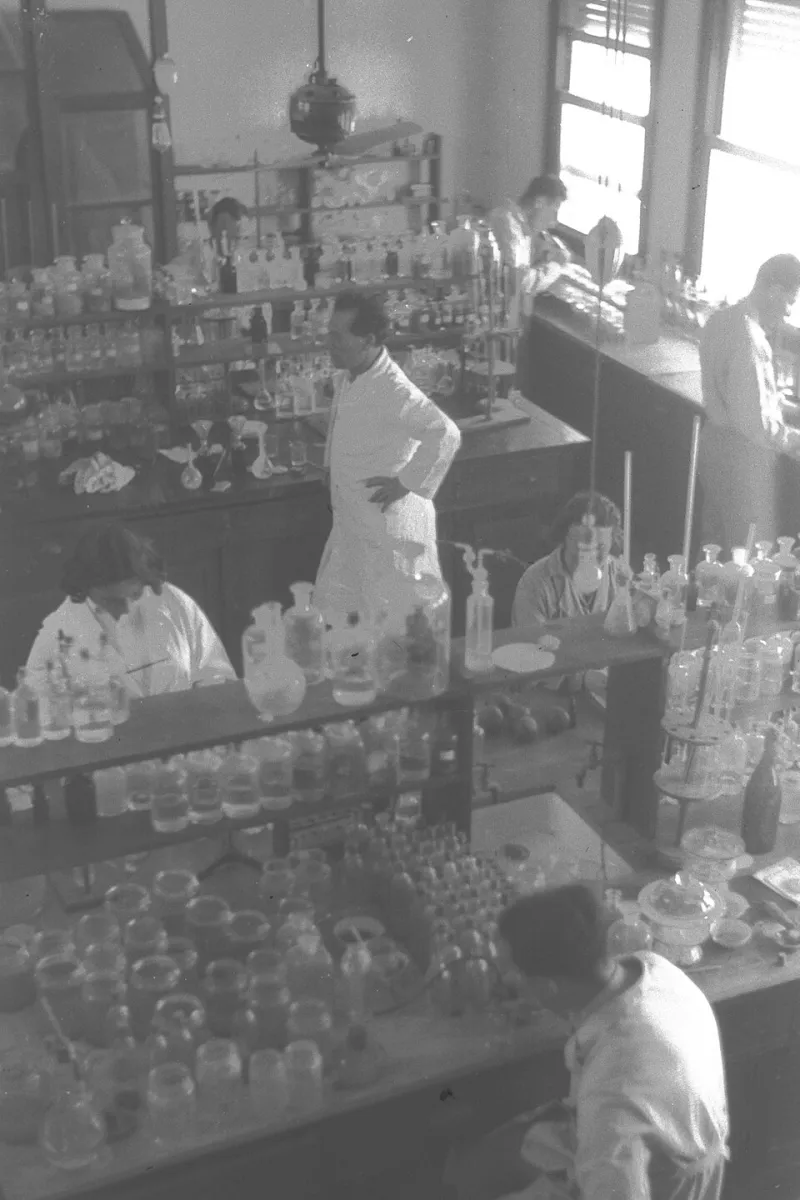
Photo: Zoltan Kluger, Public domain, via Wikimedia Commons
Evolution is a patient optimizer but an imperfect one. It works with available materials, tolerates enormous inefficiency, and has no foresight. The photosynthetic machinery inside a corn leaf or a soybean plant is the product of roughly three billion years of incremental refinement—and yet it wastes the vast majority of the solar energy it receives. Under typical Midwestern field conditions, a productive crop plant captures less than two percent of incident sunlight as harvestable chemical energy. The theoretical upper limit for the biochemistry involved is closer to eleven percent.
That gap represents, depending on how you choose to measure it, either an indictment of natural selection or the most significant untapped opportunity in agricultural science. A growing number of American research programs are betting on the latter.
Why Natural Photosynthesis Underperforms
To understand what synthetic redesign might achieve, it helps to understand where the losses occur in the natural system. The process by which plants convert sunlight, water, and carbon dioxide into sugars involves two linked stages: the light reactions, which capture photon energy and store it as chemical intermediates, and the Calvin cycle, which uses that stored energy to fix atmospheric carbon into organic molecules.
Both stages carry well-documented inefficiencies. In the light reactions, plants have evolved photoprotective mechanisms that deliberately dissipate excess solar energy as heat—a necessary adaptation to prevent cellular damage under intense sunlight, but one that comes at a significant cost to productivity. On a bright summer day, a field crop may be dumping more than half its captured light energy before it ever reaches the Calvin cycle.
The Calvin cycle has its own liability: the enzyme RuBisCO, which performs the critical step of attaching carbon dioxide to an organic molecule, is notoriously promiscuous. Under current atmospheric conditions, RuBisCO frequently grabs oxygen instead of carbon dioxide, initiating a metabolic detour called photorespiration that consumes energy and releases previously fixed carbon. Depending on conditions, photorespiration can eliminate twenty to fifty percent of potential productivity in major crops.
Engineers looking at these numbers see a system with significant room for improvement. The question is how to improve it without dismantling the extraordinary complexity that makes it function at all.
The Competing Approaches
American research into synthetic photosynthesis is not a single program but a constellation of overlapping strategies, each targeting different points of inefficiency.
The most prominent funded effort is the Realizing Increased Photosynthetic Efficiency, or RIPE, project, a multinational initiative with significant participation from the University of Illinois at Urbana-Champaign and backing from the Bill & Melinda Gates Foundation and the U.S. Foundation for Food & Agriculture Research. RIPE has focused primarily on the Calvin cycle and photorespiration, engineering alternative carbon-fixing pathways borrowed from other organisms into major food crops. Early field trials with tobacco—a standard experimental proxy—have demonstrated yield improvements of up to forty percent under certain conditions, a result that attracted considerable attention when published.
A parallel strategy involves redesigning the light-harvesting apparatus itself. Researchers at Lawrence Berkeley National Laboratory and several university partners are working on modified antenna complexes—the molecular structures that capture incoming photons and funnel their energy toward the reaction centers—that can more efficiently handle the full spectrum of sunlight rather than the narrow band that natural chlorophyll absorbs most effectively. Some approaches borrow pigment molecules from photosynthetic bacteria that operate under low-light conditions, incorporating them into plant systems to broaden spectral capture.
Perhaps the most radical approach involves bypassing biological photosynthesis almost entirely. Scientists at Harvard and Caltech, among others, are developing artificial photosynthetic systems—semiconductor-based or hybrid biological-synthetic constructs—that use sunlight to produce chemical fuels or fixed carbon with efficiencies that already exceed what plants achieve in the field. These systems are not crops, but they suggest that the productivity ceiling of solar-to-chemical conversion is considerably higher than biology has reached.
From Greenhouse to Grain Belt
Translating laboratory gains into field performance is where photosynthesis engineering faces its most demanding tests. Plants are not modular systems. Modifying one component of photosynthesis can cascade through cellular metabolism in ways that are difficult to predict and harder to correct. Increases in carbon fixation rate, for example, may outpace a plant's capacity to transport and store the resulting sugars, creating metabolic bottlenecks that limit real-world yield gains.
Field trials conducted by RIPE and affiliated programs have provided cautiously encouraging data, but researchers are careful to distinguish between proof-of-concept results and scalable agricultural impact. Moving engineered photosynthetic traits into the major commercial varieties of corn, soybeans, wheat, and rice—crops that already carry decades of conventional and molecular breeding—is a process measured in years, not months.
Regulatory pathways present an additional variable. Crops containing novel synthetic biology traits face review by the USDA, EPA, and FDA under a framework that was not designed with this category of modification in mind. The agencies have been working to update their approach to advanced agricultural biotechnology, but the timeline for commercial approval of photosynthesis-enhanced crops remains uncertain.
Energy Production and the Dual-Use Case
The implications of engineered photosynthesis extend well beyond food production. If plants or synthetic biological systems can convert sunlight to chemical energy with substantially greater efficiency, they become more attractive as feedstocks for biofuel production—a prospect that has drawn interest from the Department of Energy and from private energy sector investors.
The arithmetic is compelling. Current biofuel crops require large land areas to produce modest energy yields, in part because natural photosynthesis is so inefficient. A crop engineered to capture two to three times as much solar energy per acre would change the economic calculus of biomass energy significantly. Researchers at the Joint BioEnergy Institute, a DOE-funded facility in California, are pursuing exactly this kind of dual-function crop design—plants optimized simultaneously for food yield and energy-dense biomass.
The Stakes for 2030
The urgency driving synthetic photosynthesis research is not purely scientific. The United Nations Food and Agriculture Organization projects that global food demand will increase by roughly fifty percent by 2050. The arable land available to meet that demand is not growing proportionally, and the climate trajectory suggests that many existing agricultural regions will face increasing heat stress, drought, and weather volatility.
In that context, improving the fundamental efficiency of solar energy conversion in crops is not an incremental refinement—it is a potential lever for food security at civilizational scale. The labs working on this problem understand the stakes. Whether the science can advance far enough, fast enough, and through regulatory channels smoothly enough to make a material difference by 2030 is a question that American agricultural research is actively working to answer.