Seeds for a Decade We Can't Predict: Inside America's Living Archive of Crop Diversity
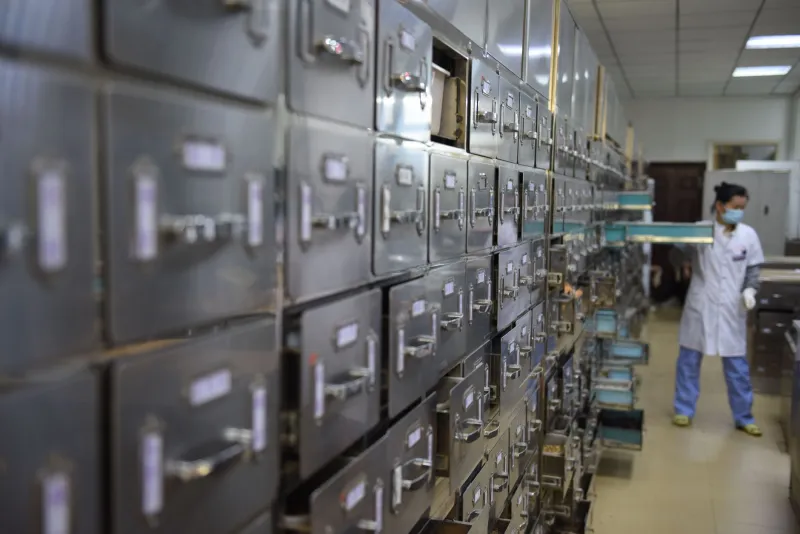
In a climate-controlled facility in Fort Collins, Colorado, roughly half a million plant samples sit in cold storage at minus 18 degrees Celsius. Each vial represents a bet on the future — a wager that somewhere in that genetic material lies the tolerance, resistance, or resilience that American agriculture will need as growing seasons grow stranger.
The National Laboratory for Genetic Resources Preservation, operated by the Agricultural Research Service, is the largest of the nation's seed repositories, but it is far from alone. From the USDA's Plant Genetic Resources Conservation Unit in Griffin, Georgia, to university-based collections scattered across the Corn Belt, the United States maintains one of the most extensive crop diversity archives on Earth. For decades, these facilities operated primarily as libraries — places scientists visited when they needed a reference sample. That era is ending.
From Archive to Workshop
The shift is driven by a simple recognition: the future is arriving faster than the catalogs can be read. Breeders facing drought in the High Plains, fungal pressure in the Southeast, and unpredictable frost windows across the Midwest no longer have the luxury of slow, sequential exploration of genetic material. They need the vaults to behave like search engines.
That is prompting a quiet revolution in how these collections are managed. Genotyping-on-demand initiatives are sequencing thousands of stored accessions, converting physical seeds into searchable digital trait maps. A breeder in Nebraska can now query a database for sorghum lines carrying specific heat-tolerance markers rather than requesting hundreds of samples and growing them out over several seasons. The seed vault, in effect, is becoming a computational resource as much as a biological one.
Cryogenic preservation is expanding the frontier further. While orthodox seeds — those that tolerate drying and freezing — store well at standard freezer temperatures, crops like potato, sweet potato, and many fruit varieties must be preserved as shoot tips in liquid nitrogen, suspended at nearly 200 degrees below zero. These cryo-collections represent some of the most genetically valuable and least explored material in the American system.
Deciding What Deserves to Survive
Every repository faces an uncomfortable triage question: with finite space, finite funding, and finite staff, which accessions get priority? Historically, curators leaned on provenance and uniqueness — wild relatives, landraces, and older cultivars no longer grown commercially ranked highest. Those judgments are now being augmented by predictive models that estimate which genetic sequences are likely to carry rare adaptive alleles.
The stakes of getting this wrong are considerable. Wild relatives of maize, wheat, and sunflower harbor disease resistance and stress tolerance that domesticated lines lost during decades of yield-focused breeding. A wild sunflower population on a Texas roadside may carry downy mildew resistance that no commercial variety possesses. If that population is lost to development or drought before its seeds enter a vault, the option it represents simply ceases to exist.
What Remains Unread
Perhaps the most striking fact about America's crop collections is how much of them remain biologically uncharacterized. A meaningful share of stored accessions has never been systematically evaluated for stress tolerance, nutritional profile, or disease response. They are, in a literal sense, unread books.
Closing that gap is the goal of several coordinated efforts now underway, pairing high-throughput phenotyping with machine learning to screen material at a pace manual evaluation never allowed. The vision for the 2030s is a national collection that functions less like a warehouse and more like an insurance portfolio — continuously appraised, actively deployed, and understood at the molecular level.
The Race Against Volatility
Climate volatility is compressing timelines in ways curators did not anticipate a decade ago. New pathogen strains, shifting pest ranges, and multi-year droughts have all triggered emergency requests to repositories for material that could respond. Each request validates the original logic of seed banking while underscoring how quickly the theoretical becomes practical.
The frozen time capsules scattered across the country are no longer relics of a cautious age. They are working infrastructure — as essential to the food system of the 2030s as irrigation canals and grain elevators — and the race now is not to fill them, but to understand what they already contain.