Minds on Record: The Neurotechnology Race to Capture, Preserve, and Restore What the Brain Forgets
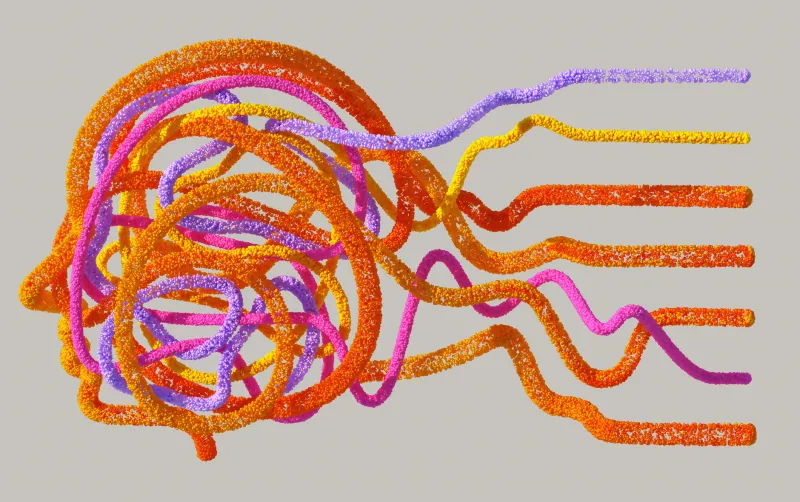
For most of human history, memory has been understood as something irretrievably personal—encoded in biology, subject to distortion, and ultimately mortal. What a person remembers, and how they remember it, has been considered among the most intimate expressions of individual identity. That assumption is now under sustained scientific pressure.
Across research institutions from Boston to San Diego, neurotechnology teams are developing platforms capable of interfacing directly with the brain's memory-forming structures. Their ambitions range from the clinically modest—helping patients with Alzheimer's retain functional recollections longer—to the philosophically staggering: creating persistent digital records of lived human experience.
What the Brain Encodes and What Science Can Now Read
Memory, as neuroscientists understand it, is not stored like a file on a hard drive. It is reconstructive, distributed across neural networks, and chemically mediated. The hippocampus plays a central role in encoding new episodic memories—those tied to specific events, times, and places—while other cortical regions handle semantic and procedural knowledge.
Brain-computer interface (BCI) technology has advanced considerably in its ability to detect and decode the electrical signatures that accompany memory formation and retrieval. Early systems developed through DARPA's Restoring Active Memory (RAM) program demonstrated that neural stimulation delivered at precise moments could improve memory encoding in patients with traumatic brain injuries. That program, launched over a decade ago, has since catalyzed a generation of follow-on research.
Contemporary systems being tested in US laboratories go further. Rather than simply stimulating the brain, they aim to record the specific neural firing patterns associated with individual experiences—essentially creating a map of the electrical events that constitute a memory at the moment of its formation.
The Clinical Imperative
The most immediate driver of this research is demographic. The United States is aging rapidly. The Alzheimer's Association estimates that more than six million Americans currently live with Alzheimer's disease, a figure projected to approach 13 million by 2050. For the families and caregivers navigating this reality, the erosion of memory is not an abstract concern—it is a daily, intimate loss.
Neurotechnology researchers are acutely aware of this context. Several leading labs frame their work explicitly around the therapeutic goal: if the neural signatures of important memories can be recorded before neurological decline accelerates, those records might serve as a scaffold for later restoration or reinforcement.
At institutions such as the University of Southern California and MIT's Picower Institute for Learning and Memory, scientists have demonstrated that closed-loop systems—devices that monitor neural activity and deliver targeted stimulation in response—can measurably improve recall in human subjects. The leap from enhancement to preservation, while scientifically significant, is beginning to look less like a distant horizon and more like a near-term engineering challenge.
When Preservation Becomes Replication
The more philosophically charged dimension of this research concerns what happens when recorded neural data is not merely used to reinforce existing memories, but to reconstruct or replay them. Several research teams are exploring whether sufficiently detailed neural recordings could be used to generate experiential simulations—not memories restored to the original brain, but memories rendered in a form that could, in principle, be experienced again or transferred.
This is where neurotechnology intersects most directly with artificial intelligence. Large-scale neural decoding increasingly relies on machine learning models trained to interpret patterns in brain activity. Companies working at this frontier, including some backed by significant private capital, are developing AI systems capable of translating neural signals into reconstructed images, narrative sequences, and emotional tone.
The implications are not lost on the research community. If a memory can be decoded, it can theoretically be copied. If it can be copied, questions of ownership, consent, and authenticity become unavoidable.
The Consent Architecture Problem
Bioethicists have been tracking this trajectory with considerable urgency. The core concern is not that memory-recording technology will arrive suddenly and without warning, but that it will arrive incrementally—each step justified by its clinical benefits—until the cumulative effect represents a transformation in the relationship between individuals and their own cognitive lives.
Consent frameworks designed for conventional medical procedures are poorly suited to technologies that interact with identity itself. If a patient consents to a memory-recording device as a therapeutic intervention during early-stage cognitive decline, what are the terms governing the data produced? Who owns the neural record? Can it be subpoenaed? Can it be sold? Can it be accessed by insurers, employers, or law enforcement?
The United States currently lacks a federal legal framework specific to neural data. Some states have begun to act: Colorado, Minnesota, and California have introduced or passed legislation addressing neurorights to varying degrees, but the patchwork nature of these protections leaves significant gaps. Researchers and advocacy organizations are pressing for comprehensive federal standards before the technology matures beyond the point where meaningful regulation remains practical.
Identity at the Threshold
Perhaps the deepest question raised by memory-digitization research concerns identity itself. Human memory is not simply a record of what happened—it is constitutive of who a person understands themselves to be. Memory is selective, emotionally weighted, and continuously rewritten by subsequent experience. A digital record of neural activity, however precise, captures something different from the living, evolving thing that memory actually is.
Some researchers argue this distinction is philosophically important but practically manageable—that the therapeutic value of even an imperfect record far outweighs the metaphysical complications. Others contend that the gap between recorded neural data and genuine memory experience is large enough to generate serious risks: patients or families investing emotional and financial resources in technologies that promise more than they can deliver, or individuals whose sense of self becomes entangled with a digital artifact that does not accurately represent their lived experience.
The Road to 2030
The trajectory of this research over the next several years will be shaped by multiple converging forces: the pace of BCI miniaturization, the interpretive power of AI decoding systems, the regulatory environment, and the degree to which public discourse catches up with laboratory progress.
What seems clear is that the question is no longer whether neurotechnology will develop the capacity to interact meaningfully with human memory, but how that capacity will be governed and to whose benefit it will be directed. The laboratories racing toward this frontier are, by and large, populated by scientists motivated by genuine therapeutic ambitions. The challenge for American society is to build the institutional architecture—legal, ethical, and democratic—capable of ensuring those ambitions serve the public interest rather than outpacing it.
Memory, for now, remains stubbornly human. How long that remains true is, increasingly, a policy question as much as a scientific one.