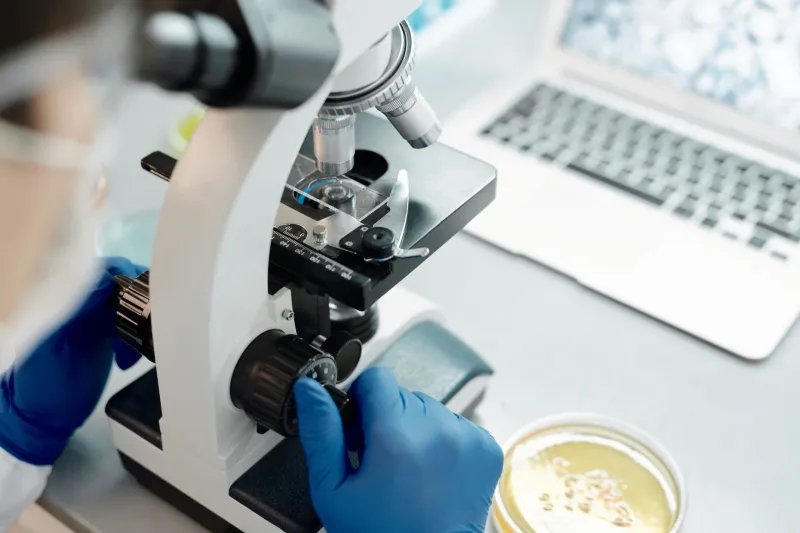
The Forest Is Speaking: How Machine Learning Is Decoding Ecosystem Distress Through Sound
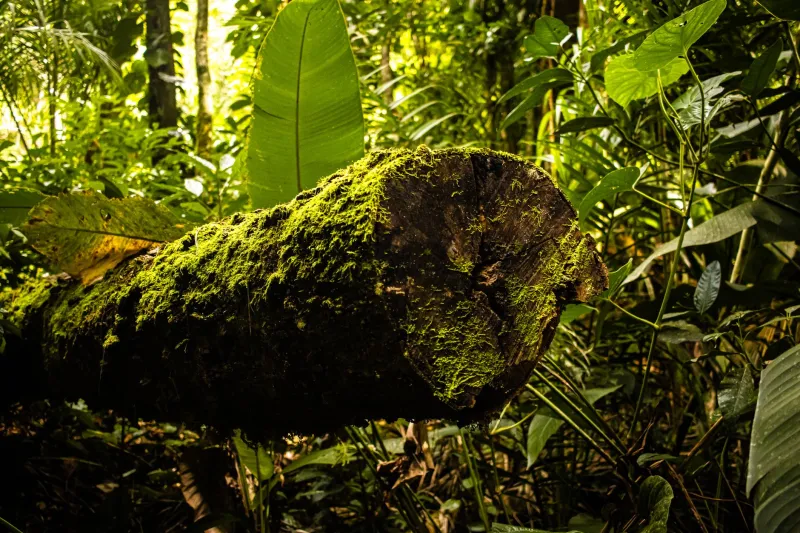
For most of recorded history, ecologists have assessed the health of an ecosystem by counting what they can see. Transect surveys, camera traps, satellite imagery—the dominant tools of conservation science have been fundamentally visual. But vision has limits. It requires proximity, daylight, and an observer. Sound does not.
Every functioning ecosystem generates an acoustic signature as distinctive as a fingerprint. The layered calls of insects, frogs, birds, and mammals, combined with the ambient frequencies of wind through vegetation and water moving over stone, produce what researchers now call a soundscape—a composite acoustic environment that encodes, in ways scientists are only beginning to fully interpret, the biological vitality of a place. When that vitality diminishes, the soundscape changes. Species go quiet. Frequencies disappear. The acoustic texture thins.
The emerging discipline of bioacoustic monitoring is built on a single animating premise: if we can learn to read those changes with sufficient precision and speed, we may be able to detect ecosystem degradation before it becomes irreversible.
Listening at Scale
The foundational challenge of soundscape ecology has always been one of scale. A single researcher with a recording device can document the acoustic environment of a small patch of forest. But ecosystems are vast, and degradation rarely announces itself uniformly. It creeps in from edges, follows disturbance corridors, accelerates under drought or temperature stress in ways that vary across microclimates and elevation gradients.
Distributed acoustic sensor networks are beginning to address that constraint. Research teams at institutions including the Smithsonian Tropical Research Institute, the Cornell Lab of Ornithology, and several land-grant universities are deploying arrays of low-cost, solar-powered recording units across endangered biomes—from the longleaf pine savannas of the American Southeast to the old-growth remnants of the Pacific Northwest. These devices operate continuously, capturing audio data around the clock and transmitting compressed files to cloud processing infrastructure for analysis.
The data volumes are significant. A network of fifty sensors recording at moderate fidelity generates terabytes of audio per month. No human team could meaningfully analyze that volume. Machine learning can.
Training Algorithms on Acoustic Complexity
The machine learning models underpinning bioacoustic monitoring are, in their architecture, not entirely unlike those used in speech recognition or music classification. They are trained to identify patterns within audio data—but the patterns they must recognize are orders of magnitude more complex than human language, and the signal-to-noise problem is formidable.
A recording made in a temperate rainforest at dawn might contain the overlapping vocalizations of dozens of bird species, the stridulation of multiple insect species, rain on leaf litter, and wind artifacts—all simultaneously. Early approaches relied on training classifiers to detect individual species calls within that acoustic mixture, a process that required extensive labeled training data and struggled with novel acoustic conditions.
More recent methodologies have moved toward what researchers describe as soundscape-level analysis. Rather than parsing individual calls, these models characterize the statistical properties of the entire acoustic environment—its frequency distribution, temporal patterning, acoustic complexity indices—and track how those properties shift over time. The underlying logic is that ecosystem health is reflected not just in which species are present, but in how their acoustic activity organizes itself collectively.
When a forest fragment begins to lose species diversity, the acoustic complexity of its soundscape measurably decreases. When invasive species establish themselves, characteristic frequency bands spike anomalously. When drought stress silences insect populations, the middle-frequency range of the soundscape collapses in ways that distinguish biological silence from mere nighttime quiet.
Ocean Soundscapes and the Coral Crisis
The application of bioacoustic monitoring extends well beyond terrestrial ecosystems. Coral reefs, which support roughly a quarter of all marine species despite covering less than one percent of the ocean floor, generate extraordinarily rich soundscapes. Healthy reefs are acoustically dense environments—the crackling of snapping shrimp, the grunts and chirps of reef fish, the ambient biological hum of a functioning community.
Researchers at the National Oceanic and Atmospheric Administration and several American university marine laboratories have been deploying hydrophone arrays on reef systems across the Florida Keys, the U.S. Virgin Islands, and Hawaii to characterize baseline acoustic profiles and monitor for degradation signatures. The approach has demonstrated measurable acoustic differences between healthy reef sections and those experiencing bleaching events, even when visual surveys have not yet captured the full extent of damage.
This temporal advantage is consequential. In reef systems, the window between the onset of thermal stress and irreversible coral mortality can be measured in weeks. An acoustic early warning system that flags anomalous soundscape changes days or weeks before a bleaching event becomes visually apparent could, in principle, allow managers to activate interventions—targeted cooling, reduced local stressors—while they retain some efficacy.
From Detection to Decision
The scientific community is candid about the gap that still exists between detection capability and actionable conservation response. Identifying that a soundscape is degrading in near real-time is a meaningful advance. Translating that signal into a management decision—and having the institutional infrastructure and funding to act on it—is a separate and more complex problem.
American conservation agencies, including the U.S. Fish and Wildlife Service and the National Park Service, have begun exploratory partnerships with research teams developing these sensor networks, but integration into formal monitoring protocols remains limited. The path from experimental deployment to standard operational practice involves not only technical refinement but also questions of data governance, interoperability with existing ecological databases, and the development of interpretive frameworks that land managers can apply in practice.
There is also the question of what bioacoustic data can and cannot tell us. Sound reveals presence and relative abundance of vocalizing species. It encodes behavioral and physiological stress responses in ways researchers are still characterizing. But it does not directly measure soil chemistry, water quality, or the population dynamics of non-vocalizing organisms. The most rigorous applications of soundscape monitoring treat acoustic data as one layer in a multidimensional observational system, not as a standalone diagnostic.
The Ark Principle Applied to Sound
What makes bioacoustic monitoring particularly significant from a long-range scientific perspective is its archival potential. Every recording captured by a sensor network is a timestamped document of what was acoustically present at a specific location at a specific moment. Aggregated across years and decades, these archives will constitute an unprecedented longitudinal record of ecosystem change—one that future researchers may be able to mine for patterns and signals not yet recognized as meaningful.
In this sense, the sensor networks being deployed today are not merely monitoring instruments. They are repositories—sonic archives of biological worlds that may not persist in their current form. The field is still young, its methodologies still maturing, and its institutional integration still incomplete. But the underlying scientific logic is sound: ecosystems speak continuously, and we are only now developing the capacity to listen with genuine comprehension.
For a civilization that has consistently struggled to perceive ecological decline until it is already advanced, that capacity may prove to be one of the more consequential technological developments of the coming decade.