Wired From the Ground Up: The Mid-Sized American Cities Stress-Testing the Infrastructure of 2030
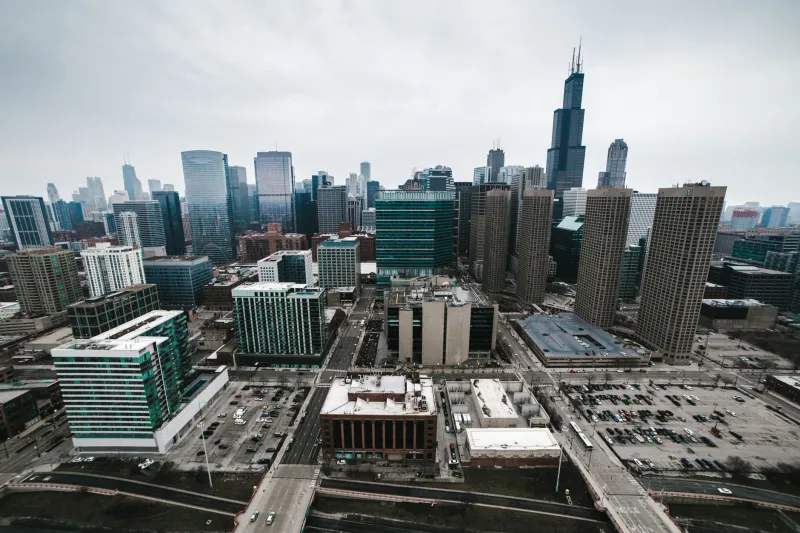
America's infrastructure conversation has long been dominated by familiar anxieties: crumbling bridges, aging water mains, power grids that buckle under summer heat. But while Washington debates funding formulas and coastal megacities absorb the headlines, something quietly significant is happening in places like Columbus, Ohio; Tempe, Arizona; and Chattanooga, Tennessee. A cohort of roughly twelve mid-sized U.S. cities has, largely without fanfare, volunteered itself as the real-world proving ground for the urban systems that may define American life by 2030.
These are not pilot programs in the abstract sense. They are live municipal experiments — operating on actual streets, serving real residents, and generating the kind of messy, unglamorous data that no simulation can replicate.
Why Mid-Sized Cities?
The selection of mid-sized cities as testbeds is not accidental. Cities in the 200,000-to-700,000 population range occupy a productive middle ground: large enough to generate meaningful infrastructure demand, yet nimble enough to bypass the bureaucratic inertia that tends to stall innovation in places like Chicago or Los Angeles. They also tend to have lower legacy infrastructure debt, making it financially feasible to layer new systems over old ones without first dismantling decades of sunk investment.
Federal incentives have accelerated this dynamic. The Infrastructure Investment and Jobs Act, passed in 2021, embedded competitive grant mechanisms that disproportionately rewarded cities willing to propose unconventional solutions. Mid-sized municipalities, often with more to gain and less to lose, responded with unusual ambition.
Smart Grids: Promise and Friction in Columbus
Columbus, Ohio — a recipient of the U.S. Department of Transportation's Smart City Challenge grant in 2016 — has spent the better part of a decade layering digital intelligence onto its physical infrastructure. Its smart grid initiative, developed in partnership with American Electric Power, uses real-time sensor data to reroute electricity load during peak demand, reducing strain on aging transmission infrastructure.
The results have been measurable. Grid-related outage duration in targeted districts dropped by an estimated 14 percent between 2020 and 2023, according to city-published performance reports. But the initiative has also exposed friction points that enthusiasm for smart systems tends to obscure. Cybersecurity vulnerabilities in connected grid infrastructure have required ongoing and expensive mitigation. Workforce retraining for utility technicians — who must now interpret algorithmic outputs alongside physical equipment — has proven slower and costlier than anticipated.
Columbus's experience underscores a principle that recurs across nearly every city in this cohort: the hardware of smart infrastructure scales faster than the human systems required to operate it.
AI-Managed Water: Tempe's Calculated Risk
In Tempe, Arizona, water is not merely a utility — it is an existential variable. Situated within the Phoenix metropolitan area, Tempe faces the compounding pressures of population growth, prolonged drought, and Colorado River allocation disputes that have reshaped Southwestern water politics for years.
The city's response has been to deploy an AI-assisted water management platform that continuously monitors consumption patterns, detects anomalous pipe pressure indicative of leaks, and models demand fluctuations based on weather forecasts and seasonal data. The system, piloted across a section of the city's distribution network beginning in 2022, reportedly identified and flagged eleven subsurface leaks within its first operational year that conventional inspection schedules would have missed for months.
Yet Tempe's water officials have been candid about the system's limitations. The AI's predictive accuracy degrades during genuinely anomalous weather events — precisely the conditions most likely to stress water infrastructure in a warming climate. There is also a structural irony embedded in the project: a system designed to conserve water requires significant energy to operate, complicating the city's parallel carbon-reduction commitments.
Climate-Resilient Roads: The Pavement Experiments
Fewer infrastructure innovations feel as unglamorous as road surfaces, yet the materials underfoot may be among the most consequential variables in urban climate resilience. Several cities in this cohort — including Peoria, Illinois and Huntsville, Alabama — have begun piloting permeable pavement and thermally reflective asphalt in select corridors.
Permeable pavement, which allows stormwater to drain through the road surface rather than overwhelming municipal storm sewers, has shown measurable efficacy in reducing localized flooding during heavy rain events. Huntsville's pilot sections recorded a 30 percent reduction in surface runoff volume compared to adjacent conventional pavement during a significant rainfall event in 2023.
The scalability question, however, remains open. Permeable surfaces require more frequent maintenance than traditional asphalt, and their performance degrades in climates with heavy freeze-thaw cycling — a significant constraint for northern cities. The per-square-foot installation cost, while declining, remains a barrier for municipalities operating under constrained capital budgets.
What Failure Reveals
It would be a disservice to frame these experiments purely as success stories. Several cities in the cohort have encountered outcomes that warrant serious scrutiny.
In one Midwestern city, an automated traffic management system — intended to optimize signal timing across a downtown grid using real-time vehicle count data — produced unexpected congestion patterns in adjacent residential neighborhoods as drivers rerouted in response to altered signal behavior. The system was partially rolled back within eighteen months of full deployment.
In another case, a smart streetlighting initiative that promised significant energy savings delivered roughly half the projected efficiency gains, partly because the procurement process had locked the city into hardware that became partially obsolete before installation was complete — a recurring hazard in a technology sector where product cycles move faster than municipal procurement timelines.
These failures are not evidence that the experiments should not have been attempted. They are, in fact, the most valuable output of the entire endeavor. Controlled failure at the municipal scale is precisely what prevents catastrophic failure at the national scale.
Scalability: The Defining Question for 2030
As these cities accumulate operational data, a more consequential question is beginning to take shape: which of these innovations can actually scale?
The honest answer, based on available evidence, is selective. Technologies that interface cleanly with existing infrastructure — sensor overlays on water distribution systems, adaptive signal software on established traffic networks — appear to scale with relative manageability. Technologies that require wholesale physical replacement of legacy systems — new pavement materials, underground grid redesigns — face compounding cost and logistical barriers that mid-sized city budgets can absorb only because they are operating in limited pilot zones.
For larger American cities, or for national-scale adoption, the capital requirements become substantially more complex. The experiments unfolding in Columbus and Tempe are essential precisely because they are generating the cost curves, failure modes, and operational playbooks that policymakers will need before committing to infrastructure transformation at a broader scale.
The Larger Significance
What these twelve cities are doing, collectively, is something the United States has rarely done deliberately: running a distributed, real-world research program on the future of urban life. The findings will not arrive in a single landmark report. They will accumulate incrementally, in maintenance logs and utility bills and traffic flow analyses, over the remainder of this decade.
By 2030, the cities that participated early will have a significant advantage — not merely in their physical infrastructure, but in the institutional knowledge required to manage it. The rest of America will be reading from a playbook these municipalities are currently writing, one imperfect experiment at a time.